Wednesday, April 18, 2012

Get to Know:Eri Yamamoto


New York City is blessed with an abundance of great music, clubs, and University programs, and thus is a destination for jazz musicians from around the world. Many who live in New York are world-renowned artists, and deservedly so, with long discographies and plenty of press, while others are not nearly as widely known but may be equally as accomplished, and equally well-known within the "jazz inner circle" so to speak.

Eri Yamamoto is one of the latter -- extremely accomplished; with multiple recordings, most recently on AUM Fidelity; a regular gig at Arthur's Tavern since 2000 with her long-standing trio; a record of international accomplishments with other fine artists; but a reputation that seems hidden to the general jazz listening public. The Eri Yamamoto Trio, simply put, is a fine modern jazz trio that more people have to know about, listen to on CD, and go to see at Arthur's Taven or when they come to your city.

A bit of background on Yamamoto before discussing her latest CD, "The Next Page" (AUM Fidelity 2012) and two of her earlier CDs. Eri Yamamoto was born in Osaka, Japan, began playing classical piano at age three, and began writing her own music at age 8. She studied voice, viola, and composition through her high school and college years, leading to her magical moment  when she visited her sister in New York City in 1995.  By random choice she took in a Tommy Flanagan performance and was immediately inspired by her first exposure to live jazz piano to move to New York and dedicate herself to learning jazz. Eri immediately entered the New School's prestigious jazz program, where she studied with Reggie Workman, Junior Mance, and LeeAnn Ledgerwood. Originally versed in the classic voices of Flanagan and Bud Powell, among others, a big turning point for her career was seeing Paul Bley, Paul Motian, and Gary Peacock together at the Knitting Factory in 1996. It showed her how to open up her language, how to free her thoughts and expression, and effectively how to unlock her voice. In 1997, while still in school, she started playing regularly at the Avenue B Social Club, and developed a musical friendship with  pianist Matthew Shipp, another pianist with a modernist's expressive style, who saw in her an artist already expressing "heart and soul [that] actually moved me, which is so unusual for a jazz student."

Since 2000, Eri's trio, with Ikuo Takeuchi on drums and David Ambrosio on bass, has been appearing regularly at Arthur's Tavern, a historic jazz club in New York's Greenwich Village. She has performed at the Hartford International Jazz Festival, An Die Musik in Baltimore, and Lincoln Center Summer Festival in New York City; appeared on two William Parker recordings; and has performed all over Europe including Italy, Holland, Norway, and Portugal.  Eri is also a teacher, having received her master of music in education and composition from Shiga University, Japan.

Yamamoto's style is graced with an ability to describe through her choice of notes the coloration of the world around her, much as Paul Motian did with his drums and brushes. Her style can be very subtle and quiet, but it always is moving forward with a definite jazz rhythm in all that she does. She has developed a style that is laced with subtle colors that can blend notes in unexpected ways. It can require close listening, but it will provide great rewards for those who do; as she puts it, "My voicing is not traditional at all. If I can hear a melody, I feel good." Eri Yamamoto has established herself as an original pianist and composer, with a tight working trio and a strong following among those in the know. Now it is time to spread the word.


"The Next Page" (AUM  Fidelity 2012) is the trio's latest disc. As I listened to it, I wrote down the following adjectives, in no particular order:  melodic, soothing, mellow, quiet, light, subtle, simple, elegant. Her music is all of these things, with simple tunes played with elegant style. The songs sound so easy, the tunes are simple, and yet the structure, the improvisations, the interplay, all create the elegance that characterizes the entire perfomrance. And one more adjective -- swinging -- needs to be added; though the music doesn't swing in the traditional sense, it alsways is moved forward by the use of the bass and drums to provide the meter, and the teamwork is very clear. Thus, despite the gentleness of most of the music, this is definitely a jazz CD and not chamber jazz. There is no showiness, no grand effects, mearely a trio playing with each other and delivering the goods.

Yamamoto's builds each tune from a melody stated at the outset, sometimes a bit sad, sometimes light and airy, and draws out the idea -- folk tunes in some cases, ballads, or the blues in others. She builds the song, adding to the melodies with differing harmonies and accents, but never with bombastic chords or dramatic changes in sound levels. It is all nicely done, understated but wisely so, and each tune leaves a distinct memory. These are organic pieces, not episodic but rather fully realized as a single, harmonious unit from start to finish. Bassist David Ambrosio has much to do with the sound, providing a strong metered bassline at times, counterpoint at others, and providing some great full-bodied soloing, particulalry on the bluesy "Night Shadows" and "Green Grows."  Ikuo Takeuchi's drumming is a collection of great subtlety played often on the ride cymbals with gentle accents from the drums, and he buoys and propels the sound forward without dominating. His composition "Up and Down", the only song not written by Yamamoto, opens the second set (to give the feel of a live show, the disc has a 60 second silent section after song 6 before opening the second set) with a rush and gives Takeuchi his biggest moment in the sun on the kit. Together the three, a unit since 2004, are clearly communicating with their instruments as well as with a telepathic sense and knowledge of each others needs.  The opening "Sparkle Song" takes a simple folk-like melody and stretches it effortlessly into a lovely mid-tempo excursion, "Night Shadows" introduces a bluesy element in the melody set forth by Yamamoto, and "Swimming Song"  is an upbeat way to close the second set.  All of the play is done with a minimum of bombast or showiness, which makes the entire CD a wonderfully cohesive and enjoyable listen, especially if one recognizes the marvelous details, subtle shadings and interplay within each.

Two other Yamamoto CDs are decribed herein, but there are others, like her last one "In Each Day Something Good" (AUM Fidelity 2010), that are equally worth listening to.
"Redwoods" (AUM Fidelity 2008) was Yamamoto's fifth release with her long standing trio. The album provides the same richness a her latest, with Yamamoto's distinctive melodies always inventive, with stong undertones of the blues, folk, or jazz throughout, and a steady hand on the tiller that never goes too far out. Her backing of Takeuchi and Ambrosio is similarly just as solid, with Takeuchi providing as necessary a strong pulse or a discreetly free-ish one with colorings from his kit.  Ambrosio again is an anchor playing a steady beat, conterpoint, or memorable solos as reequired, all with a woody, resonant sound. This disc opens quickly with a rollicking  "This Is An Apple," and ends similarly with the upbeat "Dear Friends." In between are a rich confection of wistful ballads, boppish melodies, and bluesy riffs that involved the entire trio in the defivery of a wonderfully colorful and full-bodied recording. 
Product Details"Duologue" (AUM Fidelity 2008) is a work of a different color,  a collection of improvisatory duets among Ms. Yamamoto and William Parker on bass, Hamid Drake and Federico Ughi on drums, and the saxophonist Daniel Carter."I had a dream," Ms. Yamamoto said. "It was a very clear dream. I was recording a duo album with these musicians. I woke up and thought, 'That's perfect.'" The disc opens and closes with Ughi coloring Yamamoto's themes -- a gospel-tinged  "Thank You" and a bounce  "You Are Welcome."  Drake quietly supports the gentle  "Circular Movement," but is more assertive in complementing the blues-inflected  "Midtown Blues." There is more rhymic diversity at play on this CD, although each tune is still based on strong melodic lines. The more soulful, melodic side of Yamamoto comes to the front with her work with Carter and Parker as demonstrated in the more lyrical "Violet Sky." "Conversation", with Carter on alto, and "Violet Sky" with Carter on tenor, come from further outside the simple patterns that Yamamoto is known for, but she gently ropes in the initial saxaphone burst of sound with her strong piano play and creates a pair of lithe, modern jazz .ballads.  

With the more avant-garde players than on her trio discs, this recording is a bit more angular than the others and may not have the same appeal for those seeking a more mellow experience, though it is still well within the same melodic construct. It is a stronger, modern creative sound, but still retains Yamamoto's sense of lyrical play and melody, and cannot be ignored.

Eri Yamamoto's music is for everyone who appreciates good jazz. It is for  those who like the straight and narrow, with its simple flowing melodiesand subtle nature, or for those seeking a more adventerous modern piano jazz trio with interesting ideas and strong group dynamics. Take a listen to a very underappreciated artist.

Friday, April 13, 2012

The Future of Jazz: The Pioneer High School Jazz Band Takes New York City

An awful number of magazine articles and blog entries focus on the future of jazz, the aging of the jazz audience, and the popularity of the music in a world of hip hop, electronica, and other newer forms of music. Certainly there are issues to deal with, and certainly other types of music have larger and more youthful audiences, but at least for one day I saw a much more upbeat side to the story.

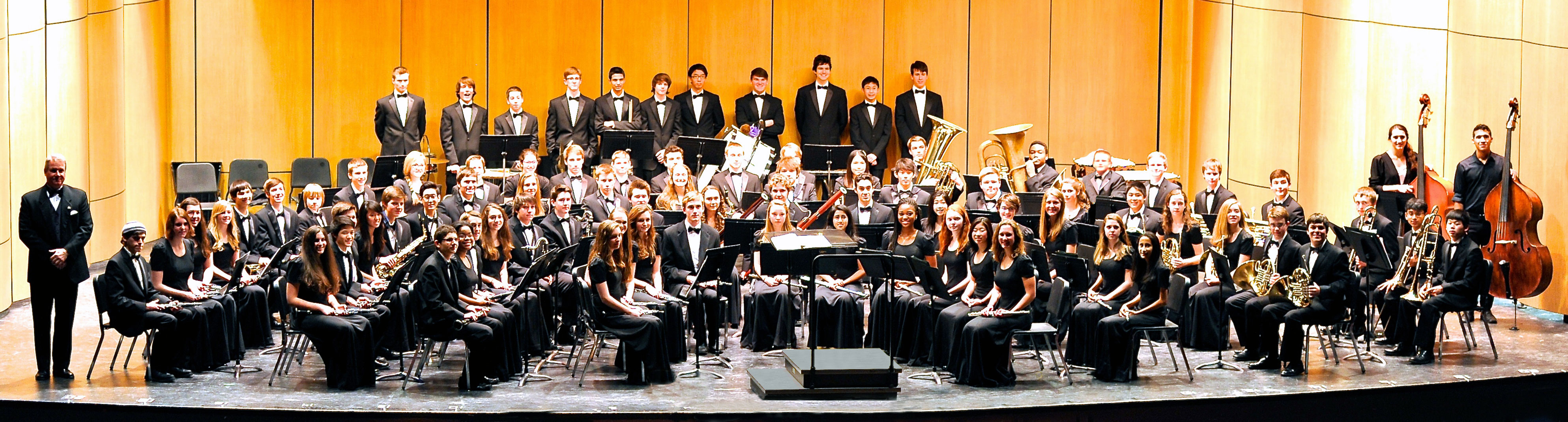
Jazz Band
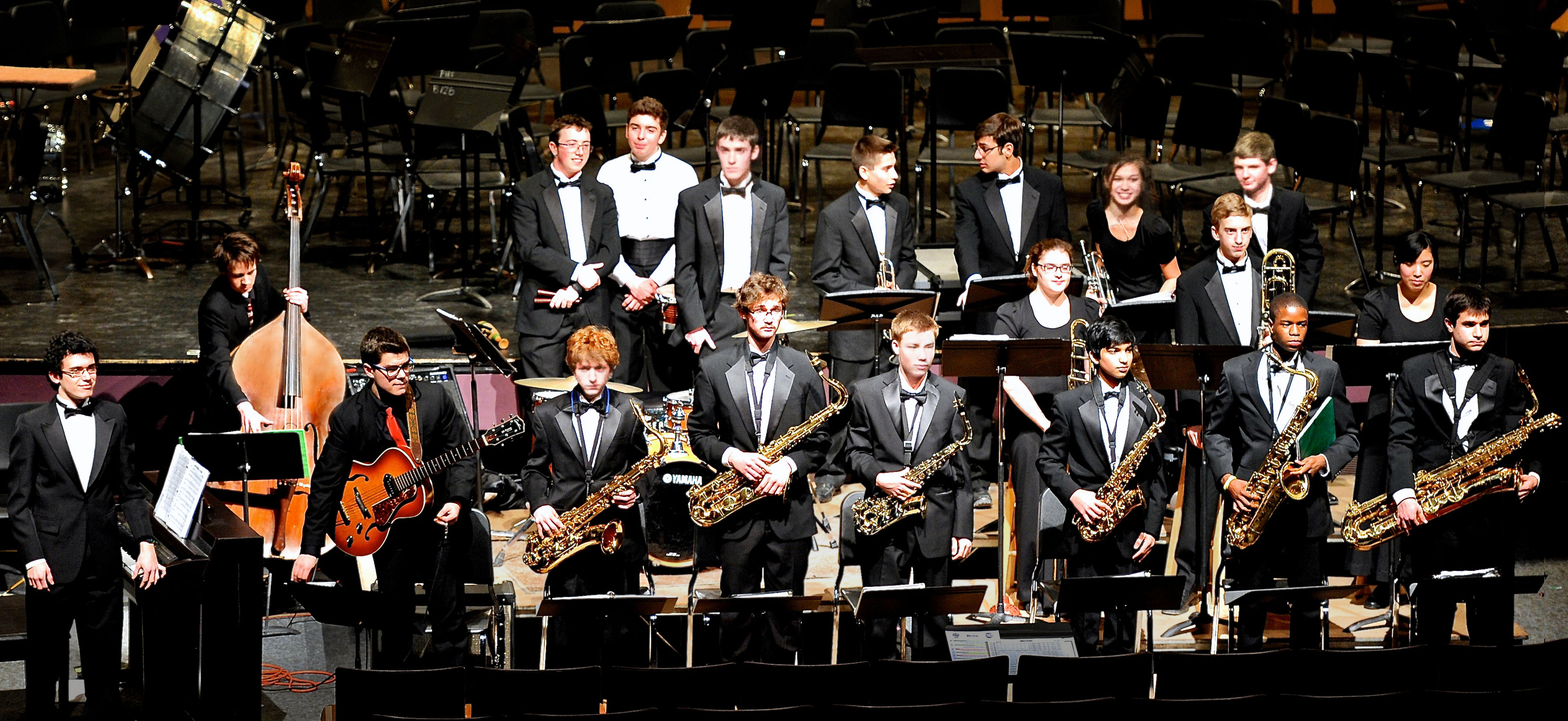
Today, the Pioneer High School Music Department from Ann Arbor, Michigan brought its award winning Concert Band and Jazz Band to the atrium at the IBM Building in New York City for an afternoon concert, and put on quite a show for an enthusiastic midtown crowd. Tomorrow night, the crown jewel of the music department, the Pioneer Symphony Band, will be performing on-stage at Carnegie Hall. 

How good is the music program at Pioneer? Well, in 2006 and again in 2011, Pioneer was selected as THE National GRAMMY Signature School  by the Grammy Foundation, making it the number one music program at the high school level in the United States.

While the concert band was great, my interest today was in seeing young and upcoming instrumentalists tackling some of the great pieces of jazz of the 20th century, with outstanding ensemble play as well as some terrific solos by selected members of the band.  The jazz band played about a half-dozen songs, highlighted for me by "Four" by Miles Davis, "I Let a Song Go Out of My Heart" by Duke Ellington, and a rousing finisher in "Manteca" by Dizzy Gillespie. Even with only so-so accoustics in the atrium, it was clear how together the band was, how spirited the players were, and how outstanding were the solos. I took some video but it does not really show the quality of the music; this clip of "Manteca" from an earlier concert -- http://www.youtube.com/watch?v=LDCPFFilDX4 -- will give you a better sense of the group.

Concert Band
Four soloists really jumped out during the concert -- Takeo Cauley on the baritone sax brought an incredibly mellow tone to a very difficult instrument to tame; Adam Olshevski on the bass had a full woody tone and incredible dexterity; Jesse Lemon's trumpet had great range and the strength to overcome the accoustical challenge; and Eddie Codrington took a few beautiful turns on the tenor sax. (Apologies if I spelled any names wrong)

One can only hope that the Pioneer Jazz Band represents just one of many such jazz programs throughout the country, albeit one of those at the pinnacle of success. Under the able leadership of David A. Leach, this band is demonstrating that jazz is truly America's music with its roots in the black american culture of the turn of the last century and in the works of Ellington, Gillespie, Davis and others, that its history and great compositions are still relevant today, and that this music will be in good hands going forward if people are exposed to it at an early age.

A great big thank you to you all for bringing the music to New York and entertaining us this afternoon.


Thursday, April 12, 2012

Listening to Spike Wilner' Latest

La TendresseSpike Wilner is one busy man. Somehow, in addition running Smalls Jazz Club, developing multiple bookings covering seven nights a week, playing an early set as a soloist or a later set with one of the many fine groups that pass through the club each week, generating new ideas to bring jazz to the audience including on-line streaming from the club, maintaining a website and Facebook page, and producing a number of very fine recordings in the "Live at Smalls" series, including one of himself playing solo, he found the time to do a trio recording on the Positone label. And a terrific one at that.


Michael “Spike” Wilner is a native New Yorker who drew his first inspiration on piano from a television program about Scott Joplin, and thus took to ragtime at an early age. He pursued ragtime throughout high school, performed “Maple Leaf Rag” at the St. Louis Ragtime Festival, and from that start decided to continue his education with an eye towards a career in music.  Following high school he enrolled in the New School For Social Research’s Jazz and Contemporary Music department in New York.  In this fertile musical environment he found like-minded players including Peter Bernstein, Jesse Davis, Larry Goldings, Brad Mehldau, Roy Hargrove, Sam Yahel, Joe Strasser and others.  He was a student of pianists Walter Davis Jr. and Jaki Byard, and  was involved with the Jazz Cultural Theater under the direction of  Barry Harris. 

As a professional on the scene in New York, he  began to play gigs in the various clubs, was a house pianist at the Village Gate as well as other long-gone clubs such as Visiones, The Angry Squire and The Village Corner, and eventually settled in at Smalls, then owned by Mitch Borden.  At Smalls, he developed his music and playing career, and eventually became a partner and manager of the club, where now he can be found most nights.  

Product DetailsProduct Details"La Tendresse" (Positone 2012), with Dezron Douglas on bass and Joey Saylor on drums, is his newest recording, following upon "3 to Go" (Positone 2008), a quintet with Ryan Kisor and Joel Frahm; his solo outing "Live at Smalls" (Smalls Live 2010), and  two earlier outings -- "Late Night: Live at Smalls" ( Fresh Sound New Talent 2004) and "Portraits" (New Jazz Renaissance Recordings 1999).  The new disc has a lot of the same characteristics as his solo outing --- a wide range of styles, innovative approaches to the music, a light and expressive touch on the keys, and the use of a lot of tempo changes within each song. Additionally, Wilner demonstrates that he can write in various styles with his four original pieces. The eight covers range from the ragtime of Scott Joplin to show tunes by Harold Arlen and Irving Berlin to the classic jazz writing of Ellington and Monk, all ably handled with fresh thoughts, lightening quick arpeggios using the entire keyboard, and expressive and intricate improvisations.

This is an interesting program of tunes that covers a broad swath of jazz history. "La Tendresse" (Tenderness), the title tune, leads off the CD and to this ear sounded entirely improvised and extremely passionate, and had echoes of the improvisations of Keith Jarrett. It is a beautiful song with which to begin. A jaunty trip through "If I Only Had a Brain Follows", almost like a palatte cleanser during a fine meal in preparation for the food  to come. It is clever, light, and catchy, with a nicely underplayed accompaniment by Saylor always keeping it moving forward. Next Wilner reaches into his schoolboy training to give us the ragtime "Solace" by Scott Joplin, but does so within his own stylings -- lots of tempo changes, shifts from lovely legato tones to sections with a lighter and shorter touch. This is an extremely fresh take on a song that is a century old and is a reminder of the threads that run from the earliest jazz players to today's stars.

Wilner's own piece "Silver Cord" follows, this time with a more composed feel than his first composition; then "Always", an Irving Berlin chestnut, follows and maintains the lyrical flow; as does "Lullabye of the Leaves", a solo tune by Wilner.  Wilner is then off and running with an unexpected, uptempo take on "Always", with the brushes and later the ride cymbal maintaining the momentum underneath the rapid and wonderful fingerings of Wilner. The last five pieces feature two tunes by Ellington and Richard Rodgers, both done at a lovely mid-tempo pace, allowing for a lot of expressive interplay, and "Crepuscule with Nellie", which shows Wilner's respect for Monk's style of play, albeit with some tasty flourishes added into the mix. Carol Burnett would cry tears of joy to hear the wonderful playing of her theme "I'm So Glad We Had This Time Together." and Wilner exits the disc with a rousing "Happy Ending", a very fast and jaunty tune which sounds very much like a theme song for the band, and a chance to allow each member to shine one last time.

This is the program of a piano player with a great deal of skill and an understanding of the history of the jazz piano. Wilner takes music from across the span of a century and, while staying true to each song's roots, finds impressive ways to add his own touch to each to create a singularly fresh CD that I highly recommend. 

Tuesday, April 10, 2012

Get to Know: Mats Eilertsten

Mats EilertsenMats Eilertsen -- does it sound at all familiar to you?  You might know the name from his many side duties on some fifty or so recordings, many on outstanding discs for ECM:   Jacob Young's "Sideways" (2008) and "Evening Falls" (2004),  Wolfert Brederode' s "Currents"(2007) and "Post Scriptum" (2011), or Tord Gustavsen's "Restored, Returned" (2010).  And if you pick up a wonderful new disc by Yelena Eckemoff, "FORGET-me-NOT"  (Yelenamusic 2012) you will find him in a trio with Eckemoff on piano and the wonderfully creative Marilyn Mazur on percussion.

So who is this wonderfully lyrical bassist?  Mats Eilertsen was born in 1975 in Trondheim, Norway, and received his education in music from the  Jazz Department at the Conservatory of Music in Trondheim. He is a highly in-demand musician and in the past decade has played in a number of bands both in Norway and internationally, inlcuding the Tord Gustavsen Ensemble, The Source with Trygve Seim, Dutch pianist Wolfert Brederode, Bobo Stenson, and Food. As noted earlier, he has also released six CDs as leader, all on the Norwegian label Hubro. Mats is considered to be one of a handful of first-call bass players in Europe, one who brings a large, warm and lyrical sound to a band, and one who can play both inside and outside as called for by the music, showing an openness and willingness to experiement with sound.

Eilersten has six recordings under his name, but it is the last three on the Hubro label that are discussed here.

"Radio Yonder" (Hubro 2010) is a quartet album featuring Eilertsen on bass, Tore Brunborg on saxophone, Thomas Dahl on guitar, and Olavi Louhivuori on drums. It begins slowly with the mood set by the guitar and bass, followed by the entry of Brunborg on saxophone. Entitled "Radio" it is a good introduction to the sensibilities of the group, which features extended ruminations by the saxophone and guitar, with a solid,  almost droning bass line under-pinning the piece. The saxophone gradually builds in tempo and tone to a crescendo, and then falls back in the final minute as the music recedes slowly back to the two stringed instruments. Cover (Radio Yonder:Mats Eilertsen)The music is always melodic and lyrical, not in the sense of standards play but rather in a freer use of the instruments and their possibilities. Eilertsen leans towards a soft and sometimes dark sound with a flexible approach to time that's near-signature to Norwegian improvised music. This is inventive material almost entirely written by Eilertsen, and much of it is mellow and meditative and quite low keyed. "Bora", the second song, has a lovely long solo for the guitar with very restrained brushwork and basslines underneath, and Dahl is very much one who brings an inventive spirit to the group.  Brunborg in turn follows on "Bora" with a lovely extended and lyrical part, very restrained but yet inventive as he travels the length of his instrument. Overall, the ECM sensibility is very strong throughout the music, which enchants at times with each soloist taking a turn in the spotlight. Brunborg in particular is outstanding thoroughout.

Cover (Elegy:Mats Eilertsen)"Elegy"  (Hubro 2010) is a different CD entirely, as it features a traditional piano trio with Harmen Fraanje a Dutch pianist, and Thomas Stronen, Norwegian, on drums. Elegy is the bassist's first with a conventional piano trio, though it's far from the tradition of Bill Evans et al. Rather it follows the tradition of free play being created by modernists such as Paul Bley, Ethan Iverson, Stephano Bollani, and others, all of whom can play "in the pocket" and traditionallly, but also have stepped out to create purely improvisational pieces as well. The group ethos and energy of this recording is evident from the start, and the line blurs quickly between composed and improvisational parts of each piece. Stronen plays with sound throughout, sometimes setting the rhythm and at other times using bells, cymbals, brushes, and other effects to paint a mood. This can be seen at the outset with a two minute piece, "Drumba" , featuring just the bass and percussionist; there is no real tune here, rather it is a piece that sets a distinct mood for the entire disc. "Elegy", the second piece is similar, and it is not until the third piece "Sukha" that the piano enters, with an immediately lovely melody featuring single notes played against a very subtle background rhythm being set by the bass and brushes. "Falling" is from a completely different sound pallette  -- angular, short bursts of sound, and strong interplay among the three. It is never overbearing, loud, or jarring, but it is discordant though it is still played at a restrained sound level. The group returns to more melodic voicings, though "Tuven, Tuven" is a very free sounding piece that is more about sounds and interplay than melodies. It has one of Eilersten's stongest solo outings as a highlight. "Nardis", the Miles Davis song, follows with an outstanding reading by the group and a very unusual climax and then quiet resolution to the nearly 11 minute piece. Fraange wrote "Six Weeks" , a piece of dark melodies that features Eilertsen's  robust, woody tone and range, and Strønen's wonderful coloration.  This is a wonderful modernist trio disc with a great depth of feeling and range of ideas.

"Sky Dive" (Hubro 2011) is Eilersten's most recent, and features a quintet this time, with his original quartet -- himself on bass, Brunborg on saxophone, Dahl on guitar, and Louhivuori on drums -- enhanced by the addition of Alexi Tuomarila from Finland on piano and fender rhodes. With this grouping, Eilersten has created the perfect band to play his music. The group features intense beauty and each demonstrates their virtuousity with soloing throughout. Clearly working together, they have created what must be called Eilersten's best work so far. Mats Eilertsen: Radio YonderThis is effectively the same group that did "Radio Yonder" with the addition of the keyboard that he used in "Elegy", thus rounding out the sound. No single player is the star, rather they all commit themselves to bringing these original creations to the fore. These are contemporary European melodies, with a lyricism that capture's the attention of the listener as sounds shift among the players. Again, the pieces are all played at a very mild tempo, and the intensity is not in the loudness of the music or crescendos, but in the interplay of the instruments. Once again Brunborg's round tone floats above the rest when he enters, but equal time is given to the lyrical playing of Tuomarila, whose sound is demonstrated beautifully on "Memento", the CDs second piece. Tuomarila is brilliant throughout the recording. Overall, the disc is contemporary European jazz at its best -- understated, sensitive, and beautifully rendered and colored by outstanding musicians. Eilersten takes few solos, yet dominates the proceedings through his compositions. Sky Dive is a particularly expressive, evocative recording by an imressive group of players and should not be missed.

Sunday, April 8, 2012

How About Trying Some New Names? (Part 2)

Happy Passover and Happy Easter to all. Tough week to get any writing in, but wanted to keep the ball rolling a bit with some of the less familiar players I have been listening to. I cannot call this a "Newbies" group exactly, but I bet most will be new to many reading this post (Assuming anyone is reading -- I have little way of knowing.)

Product DetailsFirst, pick up a copy of Dan Cray "Meridies" (Origin 2012) and enjoy the mellow sounds of a wonderful quartet. Cray is from Chicago and with his trio has produced a number of discs in the past decade, but he really hits his stride with this one.  Cray plays a wonderfully expressive piano and has a knack for improvisation, as demonstrated immediately with his take on Charlie Chaplin's "Smile". Cray demonstrates a nice writing touch as well, with some lovely melodies for both ballads and upbeat creations. Finally, his tenor sax on this outing is Noah Preminger, a young up and coming player whose album "Before the Rain" caputred many honors when it came out in 2011. A really nice listen from a very good label.

Product DetailsNext, reach for a tenor player, Dan Wilensky, and listen to "Back in the Mix"  (Speechless Productions 2012). Wilensky has written nine terrific songs here and presents them tastefully with a band that includes the veteran Mark Soskin on piano (who has just released his new disc on Kind of Blue "Nino Rota" with some beautiful interpretations of the great Italian composer's best known songs), Dean Johnson on bass, Tony Moreno on drums, and on four pieces Russ Johnson on trumpet. Wilensky's first album actually goes back a ways to And Then Some (Speechless, 1997), and since then he has been busy as a sideman, teacaher, and session player.  Now focused on being a leader he has produced three albums, with  "Back in the Mix" his lataest outing. This CD is his first to be  supported with the piano and not guitar, and Soskin adds a large measure of sonic depth and more harmonies to the mix, with great results.

Product DetailsFinally, listen to Matt Baker on "Underground" (MBCD 2012). On piano and Fender Rhodes, he leads a trio inlcudeing Joe Snaders on bass and Gregory Hutchinson on drums, with support on slected songs from Jeremy Pelt on trumpet and Danya Stephens on Tenor (and Stevens has a new CD on Criss Cross, "Today is Tomorrow" which is another outstanding listen). An Australian based in New York, he has been playing with a host of well known players for a while now, and this CD demonstrates a very sure hand on some great old music -- "If I Were a Bell", Mood Indigo" -- and five originals that show Baker as a writer and player who honors the past but imbues his playing with the sounds of today.

All three CDs are great "in the pocket" listens and feature not only new and intersting leaders but also some of the best players on the scene today like Soskin, Pelt, Hutchinson, Preminger, and Stphens. With the respect of these players and their support, it is no wonder each of these leaders has produced some outstanding sounds.

Monday, April 2, 2012

Don't Be Scared of Jazz: Two Excellent Jazz Histories and More

Product DetailsI have found that people often shy away from jazz, feeling that they "don't get it" or they "don't know where to start" or they are intimidated by what they perceive to be a very tight-knit group of insiders with secret handshakes and special codes. It can be hard to jump into the pool -- Where do I start? What type of jazz do I want to hear? What is good and what is bad? What am I supposed to be hearing? 
Product DetailsRather than being intimidating, in many ways jazz is really very accomodating and easy to enter, and from there easy to learn about and expand upon. Jazz is a very big tent full of wonderful sounds, and expands every day. When rock and roll came along, soul jazz and jazz fusion developed. Today, jazz is incorporating hip hop, sampling, and club music. Right now a couple of the biggest CDs out there are Esperanza  Spaulding's "Radio Music Society"  and Robert Glasper's "Black Radio" two discs with a distinct pop radio vibe by two jazz artists. And meanwhile, classic bop and swing go on as well, along side the avant garde, latin jazz, and other forms taken from across the globe.

Product DetailsProduct DetailsBeing such an inclusive genre, the more one listens and reaches out, the more one can learn about jazz and what it is they like. And with that, one can come to the realization that jazz is all about the music, the feeling, and what it expresses to one's self that counts.  

Product DetailsI have also found from my experience that once you are hooked you want to know more, know how jazz progressed from ragtime to dixieland to swing to bop to hard bop to cool jazz to fusion to avant garde and so on; how Lester and Coleman and the Bird influenced a whole generation (or two) of sax players; the importance of Louis and Clifford and Miles for trumpet players; and why "Kind of Blue", "Giant Steps", or "The Shape of Jazz to Come" were seminal recordings. To that end, I have found two highly readable and very different histories that I firmly recommend. While there are others, I found these two books to be eminently readable guides which beautifully explain the complexities and characters that are needed to grasp the underlying concepts and history of jazz.

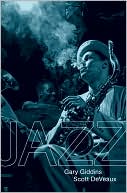
JazzThe first of the two is the more detailed, an in-depth history of jazz, simply called "Jazz" by Gary Giddins and Scott DeVeaux (W.W. Norton and Company 2009). In 19 chapters it takes one from an orientation to the instruments and forms of the music in two chapters; to its history from its roots in the black experience, the slave experience, spirituals, blues and native african music; through the music of the first decade of the 21st century. Along the way it covers each major movement with detailed studies of the major players and their music, as well as detailed studies of particular recordings and pioneering pieces along the way. The book is excellent in addressing the flow of jazz from decade to decade and movement to movement, and in spotlighting the major innovators along the way.

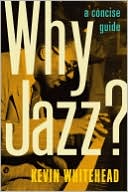
Why Jazz?: A Concise GuideFor those looking for a shorter start on the subject, the second  book, "Why Jazz?" by Kevin Whitehead of NPR radio (Oxford University Press 2011),  in fact states on the cover that it is "a concise guide." In fewer than 150 pages, in a question and answer format, Whitehead succinctly covers jazz from its beginnings in New Orleans to the current postmodern period. It is frankly amazing how much  information he can pack into this breezy overview of jazz, which includes many key performers in each period, a discussion of technical issues -- major, minor, blues, and other scales as an example -- and a glossary of terms. He talks about playing ahead of the beat, behind the beat, and what that means in cerating a swing feeling, as just one example. As noted, he does this through posing a question --"Why is Billy Holliday so revered?" as an example -- and then giving a response. In a quick 136 pages this is quite an accomplished overview, clearly not as in-depth as the Giddins book, but another great place to start.

In my reading of books and book reviews, columns and blogs, it is clear that no single history is universally lauded -- criticisms abound about viewpoints, lack of depth on European influences or Asian and Middle Eastern influences, too much credit given to one artist or another, and biases towards one movement or another. But both books provide a lot of material and a great place to begin build a foundation.

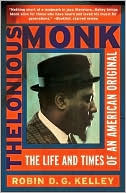
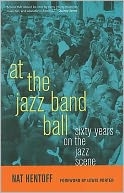
The Jazz Ear: Conversations over MusicThelonious Monk: The Life and Times of an American OriginalAfter reading these books, one might want to then delve into a particular movement, or artist, and there are countless books out there. A favorite of mine is the biography of Monk by Robin Kelley entitled "Thelonious Monk: The Life and Times of an American Original." (Free Press 2009), which not only explains why Monk is recognized as a jazz legend and genius, but also provides an amazing sense of what it was like to be a black jazz musician in the 40s and 50s, and the jazz scene in general and the countless personalities who were a part of it. Others might prefer "Pops" , a recent biography of Louis Armstrong by Terry Teachout; collections of interviews  by Ben Ratliff called "Jazz Ear" or Nat Hentoff called "At the Jazz Band Ball"; or many others. All good, all recommended.
At the Jazz Band Ball: Sixty Years on the Jazz Scene 
Finally, the point is not that one has to read books and learn about jazz to appreciate it; rather that one can first simply appreciate it, listen to it, and enjoy it, and then if interested learn more about it from some great books. First and foremost, do not be afraid of jazz, grab a hold and take a great journey into a new and wonderous world.


Pops: A Life of Louis Armstrong

Sunday, April 1, 2012

The Pure and Beautiful Sound of the Lars Jansson Trio

Lars Jansson is a Swedish piano player with whom we should all be more acquainted. His long line of discs go back over two decades and feature a number of artists and combinations, but he is best known for his piano trio music of the past decade. On "In Search of Lost Time" (Prophone 2011) he has written 14 very beautiful and accessible originals featuring his piano and Christian Sperling on bass and Anders Kjellberg on drums.

Born in 1951, in his early teens he was captivated by the music of  Miles Davis, Ben Webster, and Mose Allison on discs given to him by a relative. He started dental school around 1970, but quickly switched to music and enrolled at the Göteborg College of Music, where he had an opportunity to join jam sessions with local jazz players, and to experience the works of some seminal pianists of the period including Herbie Hancock, McCoy Tyner, Paul Bley, Bill Evans, Lennie Tristano, Keith Jarrett and Chick Corea. After school he played with the Arild Andersen Quartet and various Norwegian musicians including Knut Riisnaes and Jan Garbarek, and then with Equinox, Red Mitchell,  and many other groups, both Swedish and Danish. The Lars Jansson Trio is, and has long been, one of the longest standing and appreciated jazz groups in Sweden.  
 
The title of the disc is a translation of Proust's masterpiece "A la Recherche du Temps Perdu" and parallels its theme of experiencing time from different perspectives and of looking back into your life. The tunes on this disc represent 25 years of music compositions by Jonsson, but all have a similar beauty in the purity of the melodic lines and meditative quality of the compositions and quietude of the interplay among the three musicians. While it is not a recording that includes any standards or familiar songs, it is so accessible and purely beautiful that it should appeal to those looking for the former as well as to those looking for a creative approach to the trio using fresh sounds and melodies.

This is just an outstanding disc that washes over you with its tranquility and beauty, and cannot help but brighten anyone's day.