Had a bad week last week with my computer -- crashed a couple of times and locked in some drafts I was working on. So without further ado.....
As I listened to the new Portico Quartet CD, which is called
"Portico Quartet" (Real World 2011), and enjoy it, I realize that there are a number of groups like this that attract me which are very far from the traditional jazz trail. Today I am featureing three: Portico Quartet, Nik Bartsch's Ronin, and the Necks.
I am not sure there is a term that covers these groups exactly, but in listening I think of the term ambient jazz, music which to me is all about the creation of interesting sound, atmospheric effects, and group dynamics, e.g. are interested in the ambience, the setting, the mood. Not so much in the dynamics, the melodies, the harmonies. Each group does provide a gently moving melody line here and there, and they come and go seemingly at a whim, but everything is backed with a great deal of interesting colorings created from percussion, from winds, and from some other more exotic instruments. But to say the melody comes first would be far from the truth -- the group sound -- the ambience -- is the most important element.
All three groups are pretty mellow, heavily oriented to acoustic sounds with some minimal electronics or electrification, finding their grooves in the exchange of lead instruments and coloration from all of the players. The moods are fairly consistent and stay within a limited dynamic range, with no sudden jarring passages of noise, loudness, etc. At times, the music may be too limited in dynamics or melodic interest, and passages can become overly long and based upon the repetition of short passages with only modest changes, but there are changes occurring that you sometimes only realize after an extended period.
This is most definitely not music for everyone, but I find a lot of what I hear interesting, soothing, and fascinating to listen to. Some I find more interesting than others, as you will see.

 The Necks
 -- The Necks are a cult band out of Australia with a long list of over a dozen CDs behind them. Most of the music is based upon one hour length compositions, which are almost wholly improvised among the three members of the band, Chris Abrahams on piano, Tony Buck on drums, and Lloyd Swanton on bass. It is the chemistry among the three that creates the sound, which is hard to decribe in standard terms of composition, melody, harmony, etc. Featuring lengthy pieces of an hour or more, the music slowly unravels, so slowly that at times frankly one will tune out sections only to find that they have very gradually metamorphisized into something entirely different without one conciously hearing it happen. Very subtle changes will occur underneath the repeating drones, or other insistent grooves. Those in love with The Necks will tell you that each listen uncovers great details within the simplicity of the sound, and that each listen will reveal new layers. Those less enthused will tell you the songs are long, at times tedious, and too repetitious to enjoy frequently enougth to find those changes. I fall in the middle -- at times I find the long passages and subtlety exactly what I want to create an atmosphere with which to chill out.
This is a post-jazz, post rock, almost post everything sonic experience and when they began over a decade ago it was surely new and experimental.
The Guardian offers high praise for their work: "They may teach us to listen in a new way, but they communicate a fierce energy and warmth at the same time. Their music is a thrilling, emotional journey into the unknown. Like seeing a world in a grain of sand, The Necks permit us to hear a whole new world of music in a sliver of sound." This is acoustic mimimalism that can capture you and create a very mellow, inviting experience. The Necks have a unique, unmistakable language.
I have three Necks CDs from the middle of their career to date. I know they are more acoustic than some of the later CDs, and that is more my taste, and I think an easier way to get into the band if you wnat to sample them.
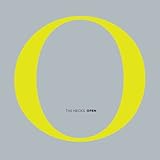
Aecther (RER 2003) may be their closest disc to what others call New Age music.It starts more slowly than other Necks recordings -- a chord, 21 seconds of silence, a chord, and the same silence, etc. for a few cycles. Then a cymbal wash, some bass, and some piano playing delicately enter the mix. The music is serence, calm, and peaceful, with changes so subtle they can easily be missed. There is some electronic work at play at times, but mostly as organ or electric piano colorings. Finally, after 50 minutes or so, the music picks up with a droning sound underpinned by gradual changes, washes of sound, changes in drumming or chords, cymbals building, and a gradual increase in volume leading to the ending. The drone almost goes too long to be listenable, but then the ending is upon us.
Overall, when I hear this music I think of the tunnel at the Detroit Airport connecting terminals -- the subtly changing colors are like the changes to the music. Nothing happens? Or everything Happens? Boring after a while? Fascinating for its subttle changes? That is up to the listenter to decide.


Hanging Gardens (RER 2002), the Necks' seventh album, is a lot more energy-driven. It too is comprised of a single hour-long piece performed nonstop. Drummer Tony Buck immediately lays down a fast-paced groove backed by Lloyd Swanton's insistent acoustic bassline. Still, like with all Necks' CDs, nothing really changes over the course of 60 minutes. Chris Abrahams comes in with a 16-bar piano motif, simple and augmented by stabs of electric piano and occasional organ Each element is put into place quickly, unlike
Aether and the music boils from about 7 minutes in until less than 5 minutes are left, at which point instruments drop out until just the Fender Rhodes is left. The music is hypnotic as usual, and there is more happening than in
Aether, and it may make a better introduction to the band.
The Necks are definitely unusual and not for everyone's taste. And even among their 15 CDs there are great variations, from the acoustic settings desribed herein to some CDs with a more heavy orientation to electronica, especially in later discs. The band definitely creates fascinating sonic landscapes.

I personally find a lot more to like with
Nik Bartsch' Ronin, whose music goes back about a decade, with the last three CDs produced on ECM. The music is called Zen-funk by Bartsch, who is the composer and pianist for the group. The other members since moving to ECM are Sha on bass and contrabass clarinet, Kaspar on drums, Bjorn Meyer on bass, and Andi Pupato on percussion. Ritual Groove Music, a single aesthetic vision that attempts to get maximum effect by minium needs -- another definition of what the band is about, pulling influences from funk, classical music, eastern ritual music, et al. The music consists of very few phrases and motifs, which are continually combined and layered in new ways. there is unity in all of the compositions, in the way the instruments are attacked, the phrasing, and the integration of the sounds. This is another sonic challenge for the listener who is looking for interesting experiences.
I find a lot more interest in the sounds of Ronin than the Necks, possibly because each modul, as each tune is called, is shorter and has a more distinct start, middle and finish, even if they are not as clear as with standard composition.
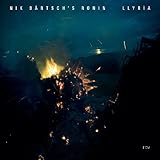
 Llyria (ECM 2010)
 is the third and most recent ECM album for the group – representing, according to Bärtsch, a relaxation of the ritualistic, pattern-bound structures with which he is associated. The music still features the overlaying of sounds to create a trancelike effect, with underlying shifts provided by the support instruments. The minimalism of the earlier works is stretched with a more robust approach, which features more of the melodic instruments of Sha on alto sax and bass clarinet. He warms the sound of the band, and increases the use of more harmonic patterns and stronger underlying grooves -- listen to Moduls 48 and 52 versus the tone poems featured in many of the other tracks. This is a very aesthetically pleasing album for me to listen to with its wash of sounds, relaxed pulse, and overall zen-atmosphere.
 Stoa (ECM 2006)
 is the first ECM Ronin CD, with the same fresh sound and zen funk attitude, and a ground breaking disc of significance for the label. With the exception of the Fender Rhodes, Ronin is an all-acoustic, ensemble playing minimalist music. Repetition is common but not acheived through looping the music. The repetitive nature of Bartsch's grooves are hypnotic but underpinned by a lot of interactive play among the team. "Zen-Funk," and "Ritual Groove," are vivid labels for the five moduls herein, all of which are written and partially improvised, and clearly done to create an organically evolving and propulsive rhythm that keeps the music from becoming dull and overly hypnotic. The five moduls are blended as one and develop a continuous experience, even as they remain clearly individualistic. While repetition and gradual evolution are fundamental to the sound, so too is an attention to melody that makes them more than mere experiments. I was immediately drawn into the world of Nik Bartsch upon hearing this for the first time. It was so different but so relaxing to listen to, truly washing over me and captivating me.
Portico Quartet has an interesting back story as a busking band around London that found its audience, reached the 2008 Mercury prize shortlist through the unique sound they invented as buskers and put into their first CD
Knee Deep in the North Sea (Real World 2007), and emerged in 2009 with a disc,
Isla (Real World 2009), that demonstrated a maturing sound and great potential and was universally reviewed favorably.
Portico' busking sound was based on danceable hooks, and musical color and interest provided by the melodic chime of the tuned hang drum and jazzy textures furnished by a double-bass and a sax. With
Isla, the group added synthesised strings and electronics and the sound morphed into a deeper setting, and with 2011's eponymous CD the band has pushed further ahead onto a new path.
 Isla (Real World 2009)
 sees the band expanding their sound. The percussive Hang Drum is still very much in the front, but the music is more intricate, with deeper melodies, more drive, and many more moods, The music is deeper and highly impressionistic, the sax sound more moody and sinuous, and songs like "The Visitor" shine with the propulsive use of the bass. Songs like "Dawn Patrol" feel akin to the music of ECM recordings, while "The Clipper" packs a lot of sounds into one of the CDs most dynamic songs. With Isla, the band's interest in minimalism has now grown to bring in a lot more textures, more dynamics, and deeper grooves that bring this music to life for the listener. Some of the change, the new depth of the music, is easily attributable to saxophonist Jack Wyllie, who has added subtle electronic effects to the colorings, and drummer Duncan Bellamy, who reaches out to the marimba and even piano. Nick Mulvey is the group’s hang specialist and the subtle but powerful double bass of Milo Fitzpatrick rounds out the group. Portico has now created complex, interlocking rhythms which recall the music of modernists Steve Reich and Philip Glass, and has moved away from the lightness of thier first recording. This is deeply layered music which is far more complex and subtle.
Portico ( Real World 2011), the new eponymous CD, begins with music reminiscient of The Necks, with "Window Seat" gradually coming into focus after a long set of bass and electronic strings set a trance-like feeling for the opener. In the following song, the sax wails almost like a stringed instrument, with a free jazz motif over a steady beat. Gradually a snappy groove is set underneath to push the tune along to its end. "Rubidium" begins as a slow meditation with a pastoral feel, but gradually changes into a thrashing drum and brass conclusion. This CD continues the new direction that the band is following, away from its busking roots, away from strong jazz grooves, into the world enhabited by The Necks and Ronin, a contemporary and bewitching sound. Everything still sounds familiar only freshened, more forward-thinking and a little bit tougher. It seems to be a bold statement --“this is what we are now”-- and while it may not represent a denial of the band’s past it certainly seems to be a new direction into the future. “Portico Quartet” dives deeper into the shaping and treatment of sound, not unlike The Necks and Ronin, but with a different set of instruments shaping its direction. “Portico Quartet” is a sonic adventure that blends melody, colour, nuance and texture into a readily accessible and fascinating CD.


 Ultimately, to me it has two antecedents, both of whom I like and have posted on before, and both of whom are equally unusual, modernist bands: Nik Bartsch's Ronin and The Necks. Very much in the same genre of sound, of experimentation with sound, of slowly evolving figures, and meditative passages. For those with a taste for the unusual.