Showing posts with label harold mabern. Show all posts

Wednesday, February 12, 2014

The Smoke Sessions

The Smoke Sessions Records label features live performances of some of the most exciting mainstream jazz players on the New York scene, recorded at Smoke, the club on Broadway on the Upper West Side of Manhattan. The first two recordings have been released, with two to follow in the next couple of months, and bother are distinguished sets.

The first of the two released was Harold Mabern, "Right On Time" (Smoke Sessions 2013) from a live set last March. It features Mabern with John Webber on bass and Joe Farnsworth on drums, the same trio that recorded the equally excellent "Live at Smalls (Smalls Live 2013) last year. As I noted then, Mabern is a 77 year old pianist who has only in the past couple of years gotten the recognition he deserves for his catalogue of work as an outstanding veteran of this era. He had dropped from the radar in the 90s and early 2000s when most of his catalogue was released on Japanese labels t them), but has come back strongly in the U.S. with "Mr Lucky" (High Note 2012), the Smalls Live recording and now this outing. this time there are 11 straight ahead, sometimes soulful, sometimes bluesy, and always entertaining cuts.  Among them are "Don't Get Around Much Anymore", "My Favorite Things", "The Nearness of You", and a rousing "Cherokee" as the finisher. More first rate music from this trio.

The second CD is Vincent Herring, "The Uptown Shuffle" (Smoke Sessions 2013) recorded live at the club last April. Herring has a long list of CDs as a leader dating back to 1989; and session man, including a rousing "battle" with Eric Alexander, also from Smoke --- "Friendly Fire (High Note 2012); and several with the recently passed Cedar Walton that are standout sessions. Here his quartet includes Cyrus Chesnut on piano, Brandi Disterheft on bass, and Joe Farnsworth on drums. Farnsworth and Chesnut are veterans, and Disterheft a newcomer who has impressed with two recent CDs as a leader. All three are charming on the recording with Farnsworth especially standing out from the drum set. Songs like "Love Walked In" and "Polka Dot and Moonbeams" are putty in Herring's hands, and are surrounded by several other covers and also two Herring originals and one by Chesnut that fit seamlessly into this well rounded set. A second standout.

Expect good things from this label, things you really should go hear live when you can. Coming next -- one by Javon Jackson, another by David Hazeltine

Monday, December 16, 2013

Begin the Countdown


Last year I came up with seven categories that served as organizing principles and guideposts for how I hear the music that I hoped would help others understand more or less what to expect from each CD. For that effort, presented on December 12, 2012, I equated the texture and feel of the music to paintings. The categories were:
  • Straight Ahead, Right Down the Middle, Mainstream Jazz
  • Modern Mainstream Jazz
  • Modern Lyrical Jazz
  • Modern Impressionistic Jazz
  • Modern Abstract Jazz
  • New Sounds of New Age Jazz
  • Latin Jazz
I will use those definitions again for these listings. [For fun, I also posited another scale during the year equating music to film characters, the James Bond to Lisbeth Salander scale, that could equally apply.]

Product DetailsOkay, so after sorting and sifting and noodling, and then doing it all again, I pulled out 65 CDs that I felt comfortably calling my favorites for the past year. Then after even more noodling and sorting, I actually came up with a very comfortable top 25, those I most enjoyed. Before listing my top 25, which will come in a subsequent post, here is a list of the 22 piano solos or trios from the remaining 40 that represent the "honorable mentions".


  • Straight Ahead, Right Down the Middle, Mainstream Jazz (Bond, James Bond)
    • Product Details
      Product Details
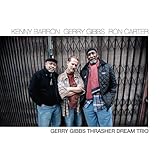
    • Gerry Gibbs Thrasher Dream Trio, "Gerry Gibbs Thrasher Dream Trio" (Whaling City Sound 2013): No thrashing at all, just some tightly played originals and covers by Gibbs and his more famous partners, Ron Carter and Kenny Barron. 
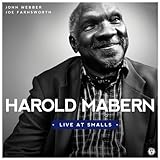
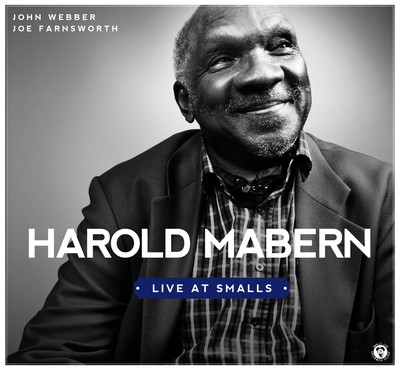
    • Harold Mabern, "Live at Smalls" (Smalls Live 2013): Doesn't get more mainstream than hearing an old master like Mabern on tunes like "Alone Together" or "Road Song", let alone a really fun version of "Sesame Street." Seven tunes give everyone a chance to stretch it out and enjoy themselves. 
    • Jimmy Amadie Trio, "Live at the Philadelphia Museum of Art" (TPRecordings 2013): Sadly Amadie recently passed away, but not before he played this concert, his first in on the order of 30 years or so. His back story is amazing, and so too is his play. Pure mainstream jazz on 12 classics. Mainstream music does not get any better than this. 

  • Modern Mainstream Jazz
    • Product DetailsProduct Details
      Product Details
      Product Details
    • Steve Kuhn, "The Vanguard Date" (Sunnyside 2013): Technically I suppose this is a re-issue, but whatever the case its one great outing, with Ron Carter and Al Foster there to make up a classic trio. Its not pure mainstream/down the middle -- there is too much wonderful free-flowing improvisation for me to put it there. Kuhn never disappoints. 
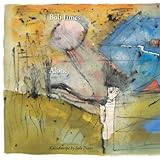
    • Bob James, "Alone" (Red River 2013): Yes that Bob James. He is a heck of a pianist as he has demonstrataed in the past when not playing "soft jazz", and as he shows here with some wonderfully soft and lyrical takes on standards, his own songs, and some from modern pop. Very nice. 
    • Alan Broadbent, "Heart to Heart" (Chilly Bin Records 2013): Downbeat gave it five stars. It's that good. It's a demonstration of what a piano can do in the hands of an outstanding player. Beauty abounds.  
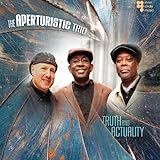
    • The Aperturistic Trio, "Truth and Actuality" (Inner Circle Music 2013): James Weidman on piano, Steve Williams on drums, and Harvie S on bass provide a nice set of modern jazz music in a classic piano trio. 
    • Lisa Hilton, "Getaway" (Ruby Slippers 2013): Lisa Hilton has not gotten the credit she deserves as a solid modern jazz pianist and hopefully this will open some minds to her music. With Nasheet Waits on drums and Larry Grenadier on bass, this is a modern set of compositions by Hilton herself. Very upbeat, very classy. Product Details
  • Modern Lyrical Jazz
    • Product DetailsProduct DetailsProduct Details
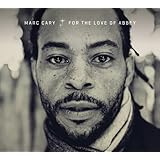
    • Marc Cary, "For the Love of Abbey" (Motema 2013): Cary worked with Abbey Lincoln for years and this solo piano outing conveys his love in some beautiful, lyrical versions of her songs. It's magical music. 
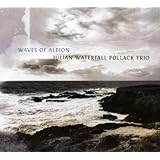
    • Julian Waterfall Pollack, "Waves of Albion" (Berthold Records 2013): Simply beautiful display of touch and sensuality. A few originals, a few traditional songs like "Shenandoah" and "Amazing Grace." This came real close to the top 25, it's fantastic.
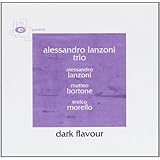
    • Alessandro Lanzoni Trio, "Dark Flavour" (CamJazz 2013): From the young artist series by CamJazz, a trio that sounds like they've been at it for a while. Lovely music, taste, and sensitivity, and interesting takes on Monk to boot.  
    • Ramberto Ciammarughi, "New Music for Two" (CamJazz 2013): With Miroslav Vitous on bass and Gerald Cleaver on drums, this is a very beautiful and classy live concert full of moving passages and creative improvisations.   Product Details
  • Modern Impressionistic Jazz
  • Product Details
      Product Details
    • K-Trio, "Meatball Evening" (Dimma 2013): There's a pretty lively jazz scene in Iceland and K-Trio is at the heart of it. It's a bit abstract, a bit moody at times, and a lot of fun is had by all. 
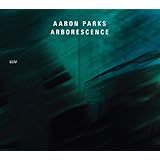
    • Aaron Parks, "Arborescence" (ECM 2013): Not the Parks we know from his more mainstream outings, this one is more in the realm of creative modern classicism, and its a beauty. By the way, a more mainstream Parks can be found on his website in a free download-only concert from Japan, and it too is recommended. [And another by the way, by the time all my lists are completed, I believe i will have had 12 ECM productions on them. It was a heck of a year for the label.]
    • Iiro Rantala, Michael Wollny, Leszek Mozder, "Jazz at Berlin Philharmonic I " (ACT 2013): Some solos, some duos, and one trio with all three players at once pouring their hearts into a mix of jazz classicism. Jazz variations of Bach, a rhumba by Chick Corea, Svantetic from Komeda and a number of originals. Beautiful music. 
    • Sunna Gunnlaugs, "Distilled" (Sunny Sky Records 2013): Perfectly balanced trio with husband Scott McLemore on drums and Porgrimur Jonsson on bass. Another Icelander, perhaps the most famous in the jazz world. This is beautiful stuff full of magic and sensuality. Product Details
    • Tingvall Trio, "In Concert" (Skip Records 2013): Another one of the modern piano trios that are popping up in Europe and following the path blazed by est and others. The trio have several other CDs out, each of which is great, and this captures them live playing some of their best tunes. Product Details
  • Modern Abstract Jazz
    • Product Details
      Product DetailsProduct Details
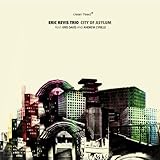
    • Eric Revis, "City of Asylum" (Clean Feed 2013): Creative abstractions with Kris Davis on piano and Andrew Cyrille on drums.
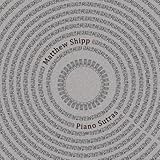
    • Matthew Shipp, "Piano Sutras" (Thirsty Ear 2013): Shipp was prolific in 2013. This is a solo outing of 13 small compositions that can be at times angular, at others lyrical, and always fascinating. It's definitely outside the box, but also it's definitely Shipp, and that's good. 
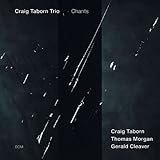
    • Craig Taborn, "Chants" (ECM 2013): Not sure if this should be in the modern impressionistic group or this one. Either way it is an exercise in creative listening among three partners that we should be glad to be in on. Engaging, mellow and interesting. 
    • Hot Eskimos, "Songs from the Top of the World" (JR Music 2013): Another young jazz trio from Iceland rethinking a number of modern pop tunes from groups like the Sugarcubes and from Bjork. But if you didn't know the sources, and I don't, you'd be fine. It's another in the line of modern piano trios seeking new sources and ideas to bring to the table.
    • In the Country, "Sunset Sunrise" (ACT 2013): Yet another in the fine line of European piano trios, Very expressive players with a sweeping vision of their jazz.   Product Details
  • New Sounds of New Age Jazz (Lisbeth Salander)
    • none
  • Latin Jazz
    • none

My next post will be of the other 18 "honorable mentions". 


Friday, May 17, 2013

Nothing Small About These Four Recordings

Big Jazz on SmallsLIVE
Spike Wilner, the impresario of Smalls Jazz Club, has done it again. From the riches of the live performances there night after night, he has plucked four sets and produced them, with the artists, for four marvelous new CDs. If you cannot be at Smalls to hear the music live, and have not yet signed up to see live performances every night on your computer, then this is the next best thing. The sound on each is great, the balance among the instruments wonderful, and the background noises that are there are subdued but give one a sense of being in the room. This makes 40 CDs now in the Smalls catalogue. For those interested in some more background, see the interview with Wilner on the blog site "All About Jazz" dated April 23, 2012 entitled "Big Jazz on SmallsLIVE."  

Harold Mabern - CoverFirst up is the veteran pianist Harold Mabern, with Joe Farnsworth on drums and John Webber on bass. Harold Mabern Trio "Live at Smalls" (SmallLIVE 2013) features a 77 year old pianist who has never gotten the full recognition he deserves for his catalogue of work but who is one of the truly outstanding veterans of this era, alongside, for example, a luminary like Kenny Barron. He dropped from the radar in the 90s and early 2000s when most of his catalogue was released on Japanese labels (and they are great CDs if you want to get them), but has come back strongly in the U.S. recently with "Mr Lucky" (High Note 2012) and now this outing. Seven tracks fill the CD with the kind of good old fashioned, driving mainstream jazz sound, sometimes straight ahead, sometimes soulful, sometimes bluesy, and always entertaining.  They stretch out on some rousing great tunes like "I'm Walking" and the "Road Song," boogie on "Boogie for Al McShann", and do up "Sesame Street" very cleverly. First rate music from a first rate trio.
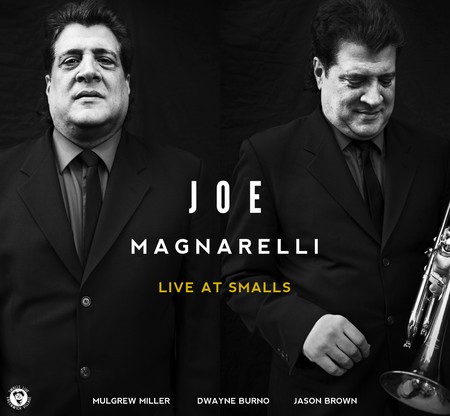
Joe Magnarelli - CoverThe next  CD is led by Joe Magnarelli, a veteran trumpet player with a catalogue of seven recordings as a leader, beginning in 1995 with "Why Not?" (Criss Cross 1995) on which he worked with Renee Rosnes, Eric Alexander, and Peter and Kenny Washington. That's a heck of a start and is indicative of the on-going quality of this mainstream trumpeter's work. With his first six CDs on the foreign label Criss Cross, he still is getting better knows to the U.S. audience with his last CD on Reservoir and now this one on SmallsLIVE. Hopefully more people will get to hear and appreciate his work. Here, on Joe Magnarelli, "Live at Smalls" (SmallsLIVE 2013), he brings to the club Mulgrew Miller on piano, Jason Brown on drums and Duane Burno on bass.  The group balances some new material with a few classics. "Ruby, My Dear" and "My Ideal" stand out as Mulgrew Miller, a personal favorite, gets some time to stretch out alongside Magnarelli, who himself plays with wonderful control and emotional balance on the songs. They tear it up pretty well too when they want. All in all a nicely balanced set, both sonically between the instruments and muscially with the choices.
Alex Sipiagin - CoverAlex Sipiagin, "Live at Smalls" (SmallsLIVE 2013) is next up. Sipiagin is a 46 year old trumpeter from Russia, relocated to the U.S. in the 1990s. He has 12 recordings since 1998, most on Criss Cross, so he too is establishing himself with the U.S. audience. He has worked with many name players on these recordings inlcuding Chris Potter, David Binney, Craig Taborn, Antonio Sanchez, Mulgrew Miller, Seamus Blake, and David Kikowski. He plays modern hard bop music, a little less traditional than the pure mainstream, but very exciting to hear. His regular partners Binney, Potter, and Sanchez, are all conversant in that style, and together they have produced a number of outstanding recordings. Here he is working with Blake and Kikowski along with Lage Lund on guitar, Boris Koslov on bass and Nate Smith on drums. This all-star cast is tight, as many have been a part of Sipiagin's band for a while, and the addition of guitarist Lund is a brilliant choice that stretches the band's harmonies and the level of excitement even further. With five songs only, each is ten or more minutes, which allows a lot of stretching out, improvisation, and interplay that often one only gets live. This is another lively set with lots to hear -- lots of interesting combinations, dynamic changes, and improvisations. This modern mainstream set is a dynamic listen.
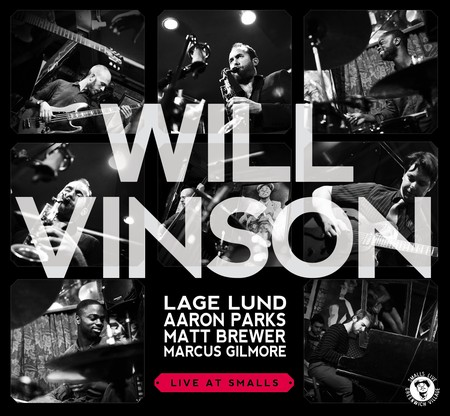
Will Vinson - CoverFinally, there is young British saxophonist Will Vinson, "Live at Smalls" (SmallsLIVE 2013) playing with Lage Lund on guitar, Aaron Parks on piano, Matt Brewer in bass and Marcus Gilmore on drums. Vinson has a recent outing, his second, called "Stockhom Syndrome" (Criss Cross 2012) with Lund and Parks that is impressive, as is this live outing.  This is a youthful band of up and coming leaders. Lund had an earlier outing as a leader on SmallsLIVE, which was terrific, and Aaron Parks is a  young pianist who produced one of the outstanding debut albums in recent years, "Invisible Cinema" (Blue Note 2008), was a co-leader with James Farm, "James Farm (Nonesuch 2011), and has recorded as a sideman with players like Terrance Blanchard, Francesco Cafiso, Gretchen Parlato, Ferenc Nemeth, Christian Scoot, and Ambrose Akinmusire.   I've posted about Parks four times in the past, both as a leader and sideman, and have always been enthused about his work. This is a set of seven songs, highlighted for me by Benny Golson's "Stablemates" and "Morning Glory". But perhaps another tune tells you about the group and the leadership of Vinson -- it's called "Swagger."

A top notch set of four live sets -- wish I had been there, but at least I can watch via Smalls' amazing back catalogue available to view on-line to members. And membership is very inexpensive for what you get, which includes live music every night, so check it out on the Smallslive.com website.

Friday, February 8, 2013

Straight Down the Middle, Straight From the Heart

I don't know, sometimes I think it has become quite unfashionable to praise mainstream jazz CDs that cover the standards with with standard band formats. that phrase "moldy fig" rattles around in my brain everytime I pick one up and enjoy it, and think about writing about it.

But then again, that is the beauty of jazz -- so much variety, so many streams -- that there is room under the tent for everyone. Want to know how wide the difference is among listener's (or critics for that matter)? Compare the list of top ten CDs as selected by readers of some of the most widely read jazz magazines, or the lists posted all over by critics.

Variety is what makes it exciting to me every time I read about new recordings, and each time I purchase something new and fresh to my ears. As I hope my posts have shown, I like a wide range of music, from the straight and narrow to some of the edges, although not all of them by any means. One minute it might be Hank Mobley, another Nik Bartsch's Ronin, and another Matthew Shipp, just as example.

I never feel bad about liking or disliking something, (although I did make a promise in January to try and understand better the Sam Rivers "Live in New York" recording because it bothers me not to hear what others love about it, even if in the end I do not). But if I dislike something, I never ever would write what has now become infamous -- "F*ck Wayne Shorter!" I might write that something wasn't for my ears even though I could hear the musicianship, etc. But bad?? I don't write about bad or good musicianship or playing etc since I am not a critic or musicologist. I do write about what I like, what is good for me and why I like it.  Writing that obscenity seems to me the product of jealousy and frustration by a person tired of not getting a share of the attention, and shows an incredible lack of respect. [Ironically I just received a copy monday of a new Frank Basile recording, "Modern Inventions" (CDBaby 2012) on which Alex Hoffman plays, and plays nicely and right down the middle, as part of this mainstream band. It's a nice recording]

For the record, I like a lot of Wayne Shorter's music, but his play at times can be too rough for my taste while at others sublime; and his compositions in his hands or others can be marvelous. This CD does not hit my sweet spot. But that is me, not he and his amazing bandmates. 

Anyway, enough of the meandering; I am here today to praise two very straight and narrow CDs I purchased recently by two established saxophonists -- "Baritone Monk" (NCB Jazz 2012) by Claire Daly, and "Touching" (High Note 2013) by Eric Alexander. No new ground is broken but this is music that truly is straight from the heart. On both CDs the sound is special, the individual solos and group play are all good, and each song is played with the appropriate emotional charge.

Baritone MonkI've written about Claire Daly before, and her outstanding command of the very difficult baritone sax. As a bass clarinetist I sat next to baritones for years and neither of us ever got near the melody, so to hear a baritone played so flawlessly, emotionally, and smoothly over the course of 10 pieces [Eleven if you count the closing holiday medley with a vocal, which I prefer to forget] by Thelonious Monk is marvelous. Actually nine pieces -- "Pannonica" is as beautiful as ever with Daly shining on the flute in this case as is Steve Hudson on piano. So much joy on other pieces, particularly "Let's Cool One" and "Fifty Second Street Theme", and mystery in the baritone-drum duo on "Green Chimneys." So much to like here. Her supporting cast is lovely -- Hudson on piano, Peter Grant on drums, and Mary Ann McSweeney on bass.

Product DetailsEric Alexander remarkably has recorded as a leader since 1992, with roughly a disc a year over the past decade on High Note, as well as a number of Japanese ballad recordings. His newest is "Touching", to be released sortly, and it features Alexander wtih three of his regular cast -- Harold Mabern on piano, John Webber on bass, and Joe Farnsworth on drums. On ocassion I have found the recordings overly predictable and just average, but this recording is one of the best I have heard. Over eight songs, many of which are not all that familiar, the band puts their feelings into the music and indelibly marks the tunes with the soul, passion, and musicianship that is needed to lift a mainstream outing up from just a walk in the park into flight. The ballads like "Gone too Soon" are played smoothly and sweetly, and  the R 'n B classic "Oh Girl" is a soulful way to end the recording on an up note. This is a cast that knows each other well and plays like it, matching each other's feelings and notes every step of the way.

For those who love solid mainstream jazz, these are real winners.

Friday, September 21, 2012

Try it, You May Like It: Music Inside and Out, Joe Alterman and Nik Bartsch

I like to make an effort to characterize the music I write about using adjectives or categories that are descriptive enough to give readers a sense of what to expect.

Sometimes I say music is "inside" or "down the middle" or "like a classic Blue Note sound", and hope that creates an image for readers. That music in my mind stresses melody, gentle harmonies, standards, and gentle improvisations.

Sometimes I say music is angular, full of dissonance, less about melody than rhythms and melodies than the sounds themselves, and use words like modern or abstract or improvisational. I hope that creates a clear image of fractals and free improvisations.

And then there are the shadings -- music that is based on melodies and standards but with some modern creativity, interesting improvisations, or unusual instrumentation; music that is a bit outside but not too far;  chamber jazz, that stresses colorations and gentle harmonies; or music that is totally abstract or improvised but not in an angular and dissonant way.

I do this so those who want to try new artists or new sounds have an inkling of what thay will be getting. This post covers two polar opposites in sound (to me). I hope it illustrates my thinking in action in this post,  which is to get people to pick up and listen to a new artist, Joe Alterman; pick up some new CDs by well known artists (David Hazeltine, George Cables, Harold Mabern); or to try some experimental music, go out on a limb and listen to Nik Bartsch's Ronin.
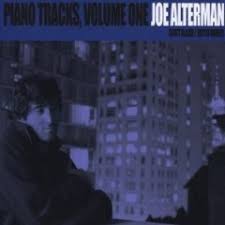
So, who is Joe Alterman, what is his music about, and will you like him? Joe Alterman is a young pianist from Atlanta who moved to New York and studied music at N.Y.U. , graduating in 2012. He says he grew up with the piano jazz greats on LPs at his home -- Garland, Jamal, Garner, Peterson, Jones and others. He worked hard to first incorporate their sounds and then to discern what made them special so he could take those lessons into his own sound. He is currently continuing with his Master's Degree at NYU, and learning from respected teachers like Jean Michel-Pilc, John Scofield, Joe Lovano and others, as well as playing at the many clubs around the city.

He has performed all over New York as well as abroad, and in 2009 recorded his first CD, "Piano Tracks Volume 1" (Self-produced 2009), a set of five standards and five originals with a true "Blue Note" fifties feel. I was lucky enought to read a bit about it then and picked it up right after it was issued.  Only 21 at the time, the CD is incredible for the maturity demonstrated, tand he sensibilities of never rushing notes and letting tunes breathe (He cites Ahmad Jamal as his hero).  He demonstrates quite a range in his play -- a bit of stride, block chording, and a strong melodic flow and swing beat. His originals include some soul-jazz, some balladry, and merge perfectly with the classics. His band is Scott Glazer on bass and Justin Varnes on drums, except for the song "First Night Home," on which it is Sam Sellinger on bass and Tiffany Chang on drums.

His second CD, "Give Me the Simple Life" (Mile High 2012) has just appeared and is a real testament to Alterman's taste, jazz interests, and abilities, and is a classic straight-ahead set that is extremely impressive. As band mates he has chosen Ahmad Jamal's rhythm section of James Cammack on bass and Herlin Riley on drums; and then he has added the classic round tones of tenor saxman Houston Person for four songs. "Georgia on My Mind" is the opener, with Person on tenor, and it is played at a faster pace than usual with a bluesier sensibility that really cooks. Moving into "Give Me the Simple Life", Alterman immediately demonstrates how well he has absorbed the music and teachings of his predessessors with a bouncy, playful and altogether charming take on the piece. This continues throughout the recording, whether covering classics like "Time After Time" with the trio or "Blue Moon" with the quartet or his own composition, "The First Night Home" with Person blowing strong. 

Alterman is solid and respectful of his roots but not necessarily a unique voice at this point, which is not to demean what is a great record that I easily recommend. He has the knowedge of what is most meaningful in the jazz tradition and a solid musical vision of who he is. His touch is reminiscent of Garland or Jones, he works carefully with his cohorts and truly listens and works with them, and has created a really lively, spirited and swinging CD. He is a young guy working to expand his vocabulary to bring the standard sound to the new century.
Product Details
Product DetailsProduct DetailsYou can see how much Alterman fits in with the classic pianists of the 50s and 60s as well as those who are still playing today like Cedar Walton or Junior Mance by considering his CD alongside three new releases by David Hazeltine, Harold Mabern, and George Cables. All three, while breaking no new ground, provide nice additions to their discographies with these recordings: Hazeltine's "The New Classic Trio" (Sharp Nine 2012), with George Mraz and Joe Farnsworth; Mabern's "Mr. Lucky" (High Note 2012) with Eric Alexander on tenor, John Webber on bass, and Joe Farnsworth on drums; and Cables' "My Muse" (High Note 2012) with Essiet Essiet on bass and Victor Lewis on drums.

In each case you know what you are going to get --- great melodies, expressive pianism and tight trios, and in the case of Mabern some lyrical saxophone play from Eric Alexander. No surprises, just great music, some standards, some less played songs from classic composers, and some original works. These gentlemen are the direct successors to Garland, Peterson, Kelly, et al, and in the case of Mabern and Cables, go all the way back to the 60s for their starts, but they are never dull as they constantly find simple ways to freshen the music with modest changes in voicings, chord choices, tempos, and improvistions. All are welcome additions to anyone's collection.  

So all four "down the middle" CDs are great, but I encourage you to start with Alterman, the new kid on the block, who represents the bridge from the past to at least one path for jazz's future.

Now lets step outside. There are all sorts of ways to do this. Just outside are those like Jarrett, Bollani, Pieranunzi, Bley, and Mehldau, those who are deeply rooted in the conventions of the piano trio, play the melodies in their songs' heads (when not doing free composition) but are more improvisational than those who play down the middle. One can follow the formidable modernists led by Vijay Iyer, Jason Moran, or Matthew Shipp, who can play both just outside the box, way outside the box, and anywhere in between as they reinvent the language of jazz for the classic piano trio but still retain the structures. One can go towards the European chamber jazz sensibilities of Bobo Stenson, Marcin Wasilewski, Anat Fort, Ketil Bjornstad, and others whose play emphasize moods and colorations over traditional jazz rhythms and beats.  Or there are the European trios following in the footsteps of E.S.T., like Helge Lien, Michael Wollny [em], and the modernists using today's pop like Bad Plus and the Curios.

Or, one can really step far outside, at least in this blogger's opinion, and create something altogether new, unusual and almost beyond category, which is where I placed The Necks, The Portico Quartet, and Nik Bartsch's Ronin in my post of  May 14.

Product DetailsToday I have two additions to the Bartsch discography -- two pre-ECM CDs that I picked up in Europe, "Aer" (Ronin Rhythm Records 2006) and "Live" (Ronin Rhythm Records 2006), both of which fall right into the paradigm for their later work. I also wanted to write about Bartsch because shortly there will be another live disc, this one coming out on ECM later this month that I wanted readers to be aware of.

Product DetailsI like Ronin a lot but recognize it is a very distintive sound and probably pretty polarizing -- I doubt there is a middle ground here between I love them and I hate them. The music is not based on melodies, barely on rhythms, and only loosely on harmonies. It is really based instead on the atmosphere that the band creates, the colorations that they achieve, and the overall mood they set. The music is called Zen-funk by Bartsch, the composer and pianist for the group; and Ritual Groove Music, a single aesthetic vision that attempts to get maximum effect by minium needs -- another definition of what the band is about. Their influences come from funk, classical music, eastern ritual music, et al. and the music itself consists of very few phrases and motifs, which are continually combined and layered in new ways. There is unity in all of the compositions, in the way the instruments are attacked, the phrasing, and the integration of the sounds. The mood is always mellow, the sound never harsh or discordant, but the music is very different.

This is a significant sonic challenge for the listener who is looking for interesting experiences. "Aer", is a studio album and includes six Moduls, as all of Ronin's tunes are titled. It also includes Sha on bass clarinet and alto sax for the first time with the group, although he is subsequently on all of the ECM CDs. Sha adds significant texture to the sound and a second melodic instrument, along with the piano, and is particularly effective in addressing the moods that the band is seeking. The "Live" album is also interesting. Here there is no woodwind and the band is really a trio of piano/rhodes, and drums/percussion. Still the sounds are fascinating, the slow changing patterns arresting, and the moods shift as textures and colors come and go, intensify or retreat, etc.

Ronin makes a lot out of very little, and achieves its goal of creating a zen-like mood and modern ritualistic groove. This is still a piano trio, but as far from the straight and narrow as one can conceivably go. The music is soothing, the sounds are never harsh or discordant, but still this is for the adventerous listener. I find it fascinating, and when I want mellow, a perfect setting matching the mood. These two discs are easily worth the investment to those who like Bartsch or want to experience "Ritual Groove Music." But you can start with the easier to find ECM recordings and still understand what his music is like.

Think about it -- there are so many facets to jazz to listen to, to accept or reject. But listening is the only way to find out, and exploring the pathway to discovery. I hope readers will take the time to listen to these CDs and others and decide for themselves -- do I like inside or out, or both? Should I buy an established artist or a new voice? Try the sound clips, the You Tube videos, and then the CDs if you think you might like the music. It doesn't take a lot of time and effort, and the payoff may be great.

Good luck to all.