Showing posts with label houston person. Show all posts

Wednesday, December 18, 2013

Today I have 18  CDs to add to the 22 from the last post, which completes my 40 honorable mention CDs for 2013, category new recordings/non-vocal. Same rules, same breakdowns, so here goes. 

Product Details
Product Details


Product DetailsProduct DetailsProduct DetailsProduct Details
Product DetailsProduct DetailsProduct Details
Product DetailsProduct Details
Product Details
Product Details
  • Straight Ahead, Right Down the Middle, Mainstream Jazz

Houston Person, "Nice 'n' Easy" (High Note 2013: This is Person's annual gift to us, his large and soulful tenor sound on a range of interesting songs from the American songbook, played with a fine supporting cast. This time around Chuck Redd's vibes add new textures, but the recording as always belongs to Person, and it's wonderful. 

Gilad Edelman, "My Groove, Your Move" (Sharp Nine 2013): Forget that his Dad is the producer of Sharp Nine rcordings and just listen. You'll hear a mature and sweet tenor from a precocious 20 something playing with an all-star band --- Joe Magnarelli on trumpet, David Hazeltine on piano, John Webber on bass, and Jason Brown on drums. Cut from the same mold as Houston Person and Eric Alexander, a bravura mainstream recording. If you like those artists you'll love this. 

  • Modern Mainstream Jazz

Noah Preminger, "Haymaker" (Palmetto Records 2013): And that's what he delivers, a haymaker of a recording with Ben Monder on guitar, Matt Pavolka on bass and Colin Stranahan on drums. A group of young Turks light up the music, most composed by Preminger himself. Fine music. 

Allison Miller's Boom Tic Boom,"No Morphine, No Lilies" (Foxhaven 2013): Somehow I slipped this out of the top 25 but lord Product Detailsknows how or why. It's fantastic music, modern tunes by Miller for the most part played by a team of Myra Melford on piano, Jenny Scheinman on violin, and Todd Sickafoose on bass, with guests coming in at times on trdanya stephens, umpet and slide trumpet, and cello. Energetic, clever, and compelling music. 

3 Cohens, "Tightrope" (Anzic 2013): Talented family sound from Anat on woodwinds, Yuval on soprano sax, and Avishai on trumpet, with support from Fred Hersch, Johnathan Blake, and Christian McBride. Reimagined standards interspersed with some free-form improvisations and some songs written by the Cohens. Anat amazes on clarinet, Avishai's tome is as pure as one will find on the trumpet. The arrangements are fun and shake things up a bit so they sound fresh and very smart. 

Danya Stephens, "That Nepenthetic Place" (Sunyside 2013): This is what modern mainstream is about, taking the harmonies, the interplay of key instruments, and the rhythms of hard bop or post bop and extending them and enhancing them with the modern beats of the 2000s. As played by a stellar tenor in Stephens, with support from a cast of young stars --- Taylor Eigsti on piano, Joe Sanders on bass, Justin Brown on drums, Ambrose Akinmusire on trumpet, Jaleel Shaw on alto, and Gretchen Parlato singing on two songs. The arranging is tight so everyone gets into the act but never clutter the compositions, which are largely originals by Stephens. Impressive. 

Geri Allen, "Motown and Motor City Inspirations" (Motema 2013): The third in her trilogy of recordings that are connected to Detroit, this one features Marcus Belgrave on trumpet and David McMurray on alto sax. It's mostly piano driven by Allen, who is expressive on a combination of songs from the Motown songbook and penned by herself. You can hear her pouring her feelings into the entire set, her love for the city, her sorrow, anger, and her prayers. It is another one that I barely dropped from the top 25, so consider it one that is highly recommended. 

  • Modern Lyrical Jazz

Lage Lund, Will Vinson, Orlando le Fleming, "Owl Trio" (Losen Records 2013): Music that is ethereal, charmingly lyrical, and wonderfully calming. Tunes from a wide range of sources -- Duke Ellington, Jim Hall, Sammy Cahn, Jerome Kern, Cole Porter, and Toninho Horta -- along with three by the group. Admirably restrained play by Vinson that blends beautifully with the fleet fingerings of Lund. 

Turner Trotignon, "Dusk is a Quiet Place" (Naive 2013): Another soulful, quiet and charming CD, this one combining the tenor sax of Mark Turner with the piano of Baptiste Trotignon. Trotignon has a string of fine piano outings and needs more attention to them in the U.S.; hopefully working with Turner will raise his profile deservedly. And Turner plays with the kind of laid back restraint needed for a CD called "Dusk is a Quiet Place". Beautiful, thoughtful music.

Dave Douglas Quintet, "Time Travel" (Greenleaf Music 2013): Dave Douglas wrote all the music. This is the most accessible CD of Douglas' that I have heard and the first one I truly appreciated for its melodies, lyricism, and lush arrangements. It's quite a group, with Jon Irabagon on saxes, Matt Mitchell on piano, Linda Oh on bass, and Rudy Royston on drums. Works for me.  

  • Modern Impressionistic Jazz

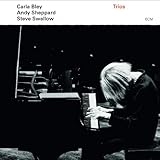
Carla Bley, Andy Sheppard, Steve Swallow, "Trios" (ECM 2013): Bley and Swallow had a great year with a couple of ECM releases among them.  Here with the talented but neglected -- in the U.S.-- Andy Sheppard on tenor and soprano saxes they impress on five modernist creations by Bley as they move in, out, and around each other. 

John Abercrombie Quartet, "39 Steps": (ECM 2013): Adding Marc Copland on piano to his trio of guitar, Drew Gress on bass, and Joey Baron on drums opened up his sound and created a truly picturesque set of 10 songs played with refinement and admirable restraint. The tribute to Alfred Hitchcock shows up on titles like "Vertigo", Spellbound", and the title piece. Very atmospheric music. 

Ralph Alessi, "Baida" (ECM 2013): The music is lovely, laid back, and nicely played by Alessi on trumpet, Jason Moran on piano, Drew Gress on bass, and Nasheet Waits on drums. But its the names of the tunes that capture one's imagination and funny bone: "Chuck Barris", Gobble Goblins", "In-Flight Entertainment", Throwing Like a Girl to name a few. 

  • Modern Abstract Jazz

Steve Coleman and the Five Elements, "Functional Arrythmias" (Pi 2013): The most approachable CD I have heard from Coleman, the master of the microtone. Its definitely a modern abstract outing but holds together nicely for me with melodies that were distinctive, angular at times, but never harsh to these ears. I suggest this for folks who want to step outside a bit without going over the edge. Miles Okazaki's guitar play is a definitely highlight. 

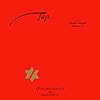
Pat Metheny, "Tap: Book of Angels Volume 20" (Tzadik 2013): All of the music is by John Zorn, who gave Metheny the choice of any of the Book of Angels songs for the CD. Metheny plays everything here but the drums, which are handled by Antonio Sanchez. so there are guitars of all kinds, piano and keyboards, marimba, bells, and other assorted sounds throughout overlayed upon each other. It's harsh at times, flowing at others, and at all times it's compelling music. First rate. 

John Zorn, "The Mysteries" (Tzadik 2013): This CD is quiet, lyrical, and charming, as played by Bill Frisell on guitar, Carol Emanuel on harp, and Kenny Wollesen on vibes. This is the spiritual side of Zorn, and this CD could also represent a number of his other recordings this past year that I could have chosen here ---"Dream Machines", "Filmworks XXV: City of Slaughter", and "Mysteries." They all were mystical outings of beauty. 

  • New Sounds of New Age Jazz

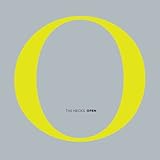
The Necks, "Open" (Northern Spy Records 2013): This is extremely far from the ordinary. To some it is incredibly boring music, to others it's trippy music. It's one 68:05 minute piece of ambient sound, music that very slowly unwinds, so that it almost sounds like it is never changing. In fact it subtly unravels as the dynamics between the players morphs slowly but steadily. It's not really music that you sit and listen to intently, it's more like music that is subliminal a slowly washes over you. Not sure how to explain it.  

  • Latin Jazz

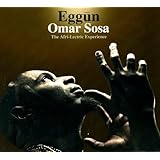
Omar Sosa, "Eggun: The Afro-Lectric Experience" (Ota Records 2013): This is Sosa's label on which he has released a number of fine latin tinged recordings in various combinations. This one has a core of six players featuring Sosa on keyboards, Joo Kraus on trumpet and Peter Apfelbaum on saxes; with additional support on various tracks by Lionel Louke on guitar and a number of other guitarists and percussionists. Its a tribute of a sort to "Kind of Blue", not in the melodies but in the spiritual feels and texture of that recording. Eggun is driven by the sounds, textures, interplay, and harmonic sensibility of Miles and Gil Evans, and has composed 15 tunes reflecting those spirits nicely. 


In my next post I will count down from 25 to 1 of my top choices of the year. Stay tuned. 

Friday, September 21, 2012

Try it, You May Like It: Music Inside and Out, Joe Alterman and Nik Bartsch

I like to make an effort to characterize the music I write about using adjectives or categories that are descriptive enough to give readers a sense of what to expect.

Sometimes I say music is "inside" or "down the middle" or "like a classic Blue Note sound", and hope that creates an image for readers. That music in my mind stresses melody, gentle harmonies, standards, and gentle improvisations.

Sometimes I say music is angular, full of dissonance, less about melody than rhythms and melodies than the sounds themselves, and use words like modern or abstract or improvisational. I hope that creates a clear image of fractals and free improvisations.

And then there are the shadings -- music that is based on melodies and standards but with some modern creativity, interesting improvisations, or unusual instrumentation; music that is a bit outside but not too far;  chamber jazz, that stresses colorations and gentle harmonies; or music that is totally abstract or improvised but not in an angular and dissonant way.

I do this so those who want to try new artists or new sounds have an inkling of what thay will be getting. This post covers two polar opposites in sound (to me). I hope it illustrates my thinking in action in this post,  which is to get people to pick up and listen to a new artist, Joe Alterman; pick up some new CDs by well known artists (David Hazeltine, George Cables, Harold Mabern); or to try some experimental music, go out on a limb and listen to Nik Bartsch's Ronin.

So, who is Joe Alterman, what is his music about, and will you like him? Joe Alterman is a young pianist from Atlanta who moved to New York and studied music at N.Y.U. , graduating in 2012. He says he grew up with the piano jazz greats on LPs at his home -- Garland, Jamal, Garner, Peterson, Jones and others. He worked hard to first incorporate their sounds and then to discern what made them special so he could take those lessons into his own sound. He is currently continuing with his Master's Degree at NYU, and learning from respected teachers like Jean Michel-Pilc, John Scofield, Joe Lovano and others, as well as playing at the many clubs around the city.

He has performed all over New York as well as abroad, and in 2009 recorded his first CD, "Piano Tracks Volume 1" (Self-produced 2009), a set of five standards and five originals with a true "Blue Note" fifties feel. I was lucky enought to read a bit about it then and picked it up right after it was issued.  Only 21 at the time, the CD is incredible for the maturity demonstrated, tand he sensibilities of never rushing notes and letting tunes breathe (He cites Ahmad Jamal as his hero).  He demonstrates quite a range in his play -- a bit of stride, block chording, and a strong melodic flow and swing beat. His originals include some soul-jazz, some balladry, and merge perfectly with the classics. His band is Scott Glazer on bass and Justin Varnes on drums, except for the song "First Night Home," on which it is Sam Sellinger on bass and Tiffany Chang on drums.

His second CD, "Give Me the Simple Life" (Mile High 2012) has just appeared and is a real testament to Alterman's taste, jazz interests, and abilities, and is a classic straight-ahead set that is extremely impressive. As band mates he has chosen Ahmad Jamal's rhythm section of James Cammack on bass and Herlin Riley on drums; and then he has added the classic round tones of tenor saxman Houston Person for four songs. "Georgia on My Mind" is the opener, with Person on tenor, and it is played at a faster pace than usual with a bluesier sensibility that really cooks. Moving into "Give Me the Simple Life", Alterman immediately demonstrates how well he has absorbed the music and teachings of his predessessors with a bouncy, playful and altogether charming take on the piece. This continues throughout the recording, whether covering classics like "Time After Time" with the trio or "Blue Moon" with the quartet or his own composition, "The First Night Home" with Person blowing strong. 

Alterman is solid and respectful of his roots but not necessarily a unique voice at this point, which is not to demean what is a great record that I easily recommend. He has the knowedge of what is most meaningful in the jazz tradition and a solid musical vision of who he is. His touch is reminiscent of Garland or Jones, he works carefully with his cohorts and truly listens and works with them, and has created a really lively, spirited and swinging CD. He is a young guy working to expand his vocabulary to bring the standard sound to the new century.
Product Details
Product DetailsProduct DetailsYou can see how much Alterman fits in with the classic pianists of the 50s and 60s as well as those who are still playing today like Cedar Walton or Junior Mance by considering his CD alongside three new releases by David Hazeltine, Harold Mabern, and George Cables. All three, while breaking no new ground, provide nice additions to their discographies with these recordings: Hazeltine's "The New Classic Trio" (Sharp Nine 2012), with George Mraz and Joe Farnsworth; Mabern's "Mr. Lucky" (High Note 2012) with Eric Alexander on tenor, John Webber on bass, and Joe Farnsworth on drums; and Cables' "My Muse" (High Note 2012) with Essiet Essiet on bass and Victor Lewis on drums.

In each case you know what you are going to get --- great melodies, expressive pianism and tight trios, and in the case of Mabern some lyrical saxophone play from Eric Alexander. No surprises, just great music, some standards, some less played songs from classic composers, and some original works. These gentlemen are the direct successors to Garland, Peterson, Kelly, et al, and in the case of Mabern and Cables, go all the way back to the 60s for their starts, but they are never dull as they constantly find simple ways to freshen the music with modest changes in voicings, chord choices, tempos, and improvistions. All are welcome additions to anyone's collection.  

So all four "down the middle" CDs are great, but I encourage you to start with Alterman, the new kid on the block, who represents the bridge from the past to at least one path for jazz's future.

Now lets step outside. There are all sorts of ways to do this. Just outside are those like Jarrett, Bollani, Pieranunzi, Bley, and Mehldau, those who are deeply rooted in the conventions of the piano trio, play the melodies in their songs' heads (when not doing free composition) but are more improvisational than those who play down the middle. One can follow the formidable modernists led by Vijay Iyer, Jason Moran, or Matthew Shipp, who can play both just outside the box, way outside the box, and anywhere in between as they reinvent the language of jazz for the classic piano trio but still retain the structures. One can go towards the European chamber jazz sensibilities of Bobo Stenson, Marcin Wasilewski, Anat Fort, Ketil Bjornstad, and others whose play emphasize moods and colorations over traditional jazz rhythms and beats.  Or there are the European trios following in the footsteps of E.S.T., like Helge Lien, Michael Wollny [em], and the modernists using today's pop like Bad Plus and the Curios.

Or, one can really step far outside, at least in this blogger's opinion, and create something altogether new, unusual and almost beyond category, which is where I placed The Necks, The Portico Quartet, and Nik Bartsch's Ronin in my post of  May 14.

Product DetailsToday I have two additions to the Bartsch discography -- two pre-ECM CDs that I picked up in Europe, "Aer" (Ronin Rhythm Records 2006) and "Live" (Ronin Rhythm Records 2006), both of which fall right into the paradigm for their later work. I also wanted to write about Bartsch because shortly there will be another live disc, this one coming out on ECM later this month that I wanted readers to be aware of.

Product DetailsI like Ronin a lot but recognize it is a very distintive sound and probably pretty polarizing -- I doubt there is a middle ground here between I love them and I hate them. The music is not based on melodies, barely on rhythms, and only loosely on harmonies. It is really based instead on the atmosphere that the band creates, the colorations that they achieve, and the overall mood they set. The music is called Zen-funk by Bartsch, the composer and pianist for the group; and Ritual Groove Music, a single aesthetic vision that attempts to get maximum effect by minium needs -- another definition of what the band is about. Their influences come from funk, classical music, eastern ritual music, et al. and the music itself consists of very few phrases and motifs, which are continually combined and layered in new ways. There is unity in all of the compositions, in the way the instruments are attacked, the phrasing, and the integration of the sounds. The mood is always mellow, the sound never harsh or discordant, but the music is very different.

This is a significant sonic challenge for the listener who is looking for interesting experiences. "Aer", is a studio album and includes six Moduls, as all of Ronin's tunes are titled. It also includes Sha on bass clarinet and alto sax for the first time with the group, although he is subsequently on all of the ECM CDs. Sha adds significant texture to the sound and a second melodic instrument, along with the piano, and is particularly effective in addressing the moods that the band is seeking. The "Live" album is also interesting. Here there is no woodwind and the band is really a trio of piano/rhodes, and drums/percussion. Still the sounds are fascinating, the slow changing patterns arresting, and the moods shift as textures and colors come and go, intensify or retreat, etc.

Ronin makes a lot out of very little, and achieves its goal of creating a zen-like mood and modern ritualistic groove. This is still a piano trio, but as far from the straight and narrow as one can conceivably go. The music is soothing, the sounds are never harsh or discordant, but still this is for the adventerous listener. I find it fascinating, and when I want mellow, a perfect setting matching the mood. These two discs are easily worth the investment to those who like Bartsch or want to experience "Ritual Groove Music." But you can start with the easier to find ECM recordings and still understand what his music is like.

Think about it -- there are so many facets to jazz to listen to, to accept or reject. But listening is the only way to find out, and exploring the pathway to discovery. I hope readers will take the time to listen to these CDs and others and decide for themselves -- do I like inside or out, or both? Should I buy an established artist or a new voice? Try the sound clips, the You Tube videos, and then the CDs if you think you might like the music. It doesn't take a lot of time and effort, and the payoff may be great.

Good luck to all.