Showing posts with label enrico rava. Show all posts

Thursday, May 30, 2013

Giovanni Guidi Trio: City of Broken Dreams

The Giovanni Guidi Trio,  "City of Broken Dreams" (ECM 2013) is absolutely magnificent. It is definitely bound for my shortlist as one of my favorites for 2013.

Product DetailsI expect this will be Guidi's breakout CD for recognition here in the States, but one should know that he has a string of accomplished CDs dating back to his debut release, "Indian Summer" (CamJazz 2007), a stunning quartet set with Dan Kinzelman on sax and clarinet, Francesco Poticelli on bass, and Joao Lobo on drums. It was then that I began wathing the career of this 28 year old pianist.
Product DetailsGuidi is not one to stand pat with his music, and has demonstrated a willingness to experiment with his sound palette, composing for trio, quartet, and larger ensembles. "The House Beyond This One" (CamJazz 2008) was another rich quartet outing, while "Tomorrow Never Knows (Venus 2006) was a trio outing featuring 13 original miniatures. And then there was "The Unknown Rebel Band" (CamJazz 2009), a tentet, which has a whole different outlook with its larger sounds and textures, and bigger dynamics. Guidi's piano is less distinctive within the ensemble when compared to the rest, although the band is terrific and the melodies are full of dynamic playing. He returned to a smaller format for "We Don't Live Here Anymore" (CamJazz 2011), a quintet featuring trombonist Gianluca Petrella and sax player Michael Blake.  Guidi also figured prominently on "Rava on the Dance Floor" (ECM 2013) and "Tribe" (ECM 2011), the latter also with Enrico Rava; and has played on several recordings by Petrella and Fabrizio Sferra, both outstanding players in Italy on trombone and drums respectively   

Product DetailsOn this latest release Lobo returns on drums, but the bass player is Thomas Morgan, who has had a string of outstanding recordings with Craig Taborn (Chants"), Tomasz Stanko ("Wislawa"), Dan Tepfer ("Five Pedals Deep") and others.  From the outset, with the lovely title song "City of Broken Dreams", the stage is set for what is a first rate, lyrical and moving piano trio album. Guidi is strong throughout the set, and Morgan demonstrates his own strength many times as he is given a lot of space to work with by composer Guidi. Morgan stands out for example on the second piece "Leonie" with a stronly plucked and deep tone, but also with his own reflective play as he explores the melody set by Guidi.

fotoThe narrative throughout has this same deeply moving and lyrical sensibility. All thre players stand out. Morgan develops shining improvisations around Guidi's melodies and provides point/counter-point responses to Guidi's piano at other times. On "Just One More Time" Guidi's pianism sparkles with his light and rapid touch and cascading notes, while Morgan again has a masterful solo. Lobo is a great percussionist who has clearly learned from Motian and others how to provide interesting coloration while quietly moving the music along as needed with a light touch on his cymbals and drum foot.

Product DetailsIt's hard to single out any one song for praise as all are deserving. The  pensive "Forbidden Zone" reflects the more serious side of Guidi's composing; it's a slowly played song full of rich deep tones from the piano and bass with minimal but effective support from Lobo. This same quiet strength is later revisited with the lovely and thoughtful "The Way People Live." And in a change of mood, "No Other Possibility" is a more modern and somewhat more jagged tune that offers a nice change of pace right in the middle of the set.

Finally, in the end the set is bookended by a variation on the title song, privoviding another chance to hear the absolutely riveting pianism of Guidi as the song builds into a very moving expression of this composer and pianist's great abilities.

Fantastic music that shouldn't be overlooked. Guidi is a young pianist on the rise. Catch the wave.

Monday, October 8, 2012

Italian Jazz: Roberto Gatto, The Man Behind the Kit

Rea, Sellani, Basso, Pieranunzi...the first four of my Italian series was begun during the summer, and has been on hiatus for quite a while.

Today, I am picking it up again with drummer extraordinaire Roberto Gatto, clearly the go to drummer for much of the past three decades among Italian jazz players. Gatto has an exhaustive list of leader discs, but even a greater number of CDs as the beat behind those great names listed above as well as many others. One clear reason for his position in the pantheon of drummers is his great flexibility -- he can get out in front and drive a band with the best of them, he can drop bombs when needed or back off and provide quiet but insistent support, or he can be a colorist playing whispering brushes and gentle sticks. He is adaptable to a range of music, as will be seen in the discography presented here, and he writes great tunes, be they lyrical romantic themes, jaunty  swing songs, or simple modern creative jazz.  I've yet to come across a disc with Gatto playing hat I have not enjoyed, whether as the leader or as a member of some awesome groups.

Gatto was born in Rome in October 1958, so he turns 54 this month. He began playing professionally  in 1975 with the Trio di Roma, a superstar group in the making with Danilo Rea on piano and Enzo Pietropaoli on bass. Since then, he has built a solid reputation and large portfolio playing all over the world. His own groups are characterized by the first class techniques of himself and his support players, along with a sterling ear for composition, for the subtleties of timbre, and by a warmth typical of his mediterranean roots.
Roberto Gatto is one interesting and original drummer and composer. A list of his collaborators is a who's who of jazz: as a sideman, he has played with Dave Liebman, Phil Woods, James Moody, Barney Wilen, Ronnie Cuber, Michael Brecker, Joe Lovano,  Curtis Fuller,  Cedar Walton, Tommy Flanagan, John Scofield, John Abercrombie, Bobby Hutcherson, Joe Zawinul, and Pat Metheny. As a leader he has recorded fifteen albums with many of the first names in Italian jazz: Enrico Pieranunzi, Franco D'Andrea, Stefano Bollani, Enrico Rava, Paolo Fresu, Rosario Giuliani, Gabriele Mirabassi among others.  
Of the 15 as leader, his first, which I do not have, was made in 1986 with Michael Brecker, "Note" (Gala 1986).  Heck of a way to start a recoding career. Of the remaining fourteen, I have  seven.
 
Product Details"Improvissi" (Gala 1989) was his third recording, with co-leader Danilo Rea on piano, and some quiet supporting strings in the background on selected tunes. I have already praised Rea in an earlier post, and here the outstanding pianist and drummer play an assortment of songs covering jazz interpretations of classical music, highlighted by "The Moldau" by Smetna and Debussy "La Lotta." As would be expected, Gatto provides a delacate touch on the disc, mostly colorations with brushes and light high hat work. There is one solo percussion piece on which Gatto gets to demonstrate his use of his complete kit, an interlude between the duets. This is not an essential disc to hear, but is a very lyrical and lovely set mostly notable for Rea's piano.
Roberto Gatto - Roberto Gatto Plays RugantiniGatto says in his liner notes to "Rugantino" (CAM Jazz 2001) that he had been struck in 1978 at age 20 by the music to the movie "Rugantino", which was composed by Armando Trovaioli. The popular folk-style music of the movie had stuck with him for years, and in 1999 he began to assemble a group to undertake this project, with the blessing of the composer himself. Working with the arranger Paolo Silverstri, he put together an amazing group from among the best Italy had to offer: Enrico Rava, Enrico Pieranunzi, Gabriele Mirabassi, Rosario Giuliani, Luca Bulgarelli, Gianluca Petrella and others came together with the Orchestra Roma Sinfonieta to create this masterwork. Opening with an overture, just as one would hear at a Broadway show, one immediately is drawn into the drama and emotions that infuse the entire score. Ravae and Pieranunzi are clearly the masters of their instruments, but the saxes of Giuliani, the trombone of Petrella and clarinets of Mirabassi, all leaders in their own right, are equally magnificent. This is Gatto's vision beautifully realized by world class players, and a delight to listen to for those who like the concept of a jazz score, with lots of ensemble play along with selected solos that jump from the speakers. Gatto here was the facilitator and while his drumming is omnipresnet setting time, pushing certain sections along, and coloring others, it is the entire band itself that is the star. Great music throughout, a tour de force of orchestral interplay. Should not be missed if this type of group and music is your cup of tea.
Traps"Traps" (CAM Jazz 2007) displays another facet of Gatto, as a composer of 9 of the 10 tracks on this disc. Gatto also has a chance to stand out more on this quartet disc, with Daniele Tittarelli on alto and soprano saxes, Luca Mannutza on piano, and Luca Bulgarelli on bass. Gatto demonstrates a passionate, nuanced, and lyrical style in his writing, which provides wonderful opportunities for his bandmates to shine, particularly Tittarelli on his alto sax. Gatto clearly also has a playful side, as demonstrated in the jaunty title tune. "Traps" is a terrifically upbeat bounce with a simple but very effective little tune captured first by the bright sound of the alto and later the piano. Gatto provides the timekeeping and uses his full arsenal with snares, toms, high hats and cymbals creating the movement that makes this an outsatnding, cheerful tune. Going back, the first two pieces, which precede "Traps", demonstrate the lyrical side of his writing, starting with long and lovely legato lines for  the piano and sax and gentle whispers from the drumset. Later Gatto's compositions "Octagonal" and "Monkish" are just that, a bit more angular or jagged, with appropriate spaces and jaunty melodic lines. This is an outstanding CDs of Gatto's work. 

That next CD is "The Music Next Door" (Emarcy  2009) and it is killer, with Tittarelli again on the saxes, Rosario Bonaccorso on bass, and two of the biggest shining stars in Italian jazz, Stefano Bollani on piano and Paolo Fresu on trumpet. The quintet clearly demonstrates the highest degree of musicianship possible. From their long relationships from many other ensembles and records, they also demonstrate their abilities to hear and complement each other, and demonstrate outstanding ensemble play.  The music is a bit livelier than "Traps", with Gatto's six originals more upbeat, giving him a greater opportunity to lead from the back. The group plays in the great tradition of quintets like this, with opening statements of the tunes followed by each player taking a turn on solos before a return to ensemble play. The tunes themselves are nicely composed, the harmonics easy on the ear and tuneful -- this is modern creative jazz with its legacy clearly steeped in tradition. Gatto is omnipresent setting the pace, coloring the tunes, or pushing the beat, but is never in your face -- he is never bombastic, and doens't need to prove his mettle by being out front. A great turn for everyone and terrific play by Fresu and Pieranunzi make this a must listen if you want to hear Gatto's conceptions at their best.

As noted above, Gatto clearly is part of the great tradition of drummers dating back into the 50s and 60s, and he demonstrates his debt to one of them with two tribute discs, "Remembering Shelly" (Albore Jazz 2009) and "Remembering Shelly 2" (Albore Jazz 2010).  Again using a "standard" quintet reflective of the groups of Shelly Manne, he has Giuseppe Bassi on bass, Luca Mannutza on piano, Max Ionata on sax, and Macro Tamburini on trumpet. Product DetailsThese are live recordings played at the same sessions, and include several songs that were from Manne's "book" along with a couple of Gatto orginals done in the same vein. These are two wonderfully upbeat, swinging bop discs, with Gatto's steady hand given full rein to play in the Manne/60s style. Strong leadership and timekeeping, steady high hat and bass drum set the tempo for terrific interpretations of "Nightingale", "Fan Tan", and Speak Low" for example could have been right out of the days of Shelly's Manne Hole, with unison play as well as solos by the trumpet and sax. This is A-One hard bop in a live setting, which adds to the electricity that can be felt throughout. Two great tributes that are not slavish to the past, but rather terrific interpretations thereof.

Finally, I cannot leave Gatto without noting that he has over 50 recordings as a side man as a contributor to many other fine CDs. Of note from my collection, I would list these:

  • Product DetailsEnrico Pieranunzi "Jazz Roads" (CAM Jazz 1980)
  • Tommaso, Rava Quartet "La Dolce Vita" (CAM Jazz 2000)  
  • Phil Woods "Embraceble You" (Philology 1988)
  • Rava, Fresu Quintet "Shades of Chet" (Via Veneto 1999)
  • Rava "The Words and the Days" (ECM 2005)
  • Bollani and Gatto, "Gershwin and More Live" (Philology 2006)


Friday, July 20, 2012

A Saxophone Giant You Probably Never Heard: Gianni Basso

Enrico Pieranunzi, of whom I wrote in the last post, most likely appeared on the radar screen of a lot of readers, given his long and brilliant career and his recent recordings on CamJazz, which is a label widely available in the U.S.

I am really not sure that Gianni Basso, despite a longer tenure on the jazz scene in Italy, has nearly the recognition in the U.S. and perhaps not even in the rest of Europe. He came to my attention via Adam Nussbaum, the accomplished drummer, during a conversation at Sally's Place, as somebody I had to hear, and as I know now, for good reason. Basso is an old school tenor sax player out of the 40s and 50s mold -- a great big round sound, accomplished player of swing and hard bop, and a wonderful balladeer to boot. Think Don Byas, Ben Webster, Dexter Gordon, all of them his contemporaries, and you immediately get the picture.

Born in 1931 in Asti, Italy, his discography as a leader dates from 1960, while his career in jazz began shortly after World War II. He recorded right up until his passing in 2009, and left a long legacy of great music in his wake.  He actually began as a clarinetist playing professionally in Germany and Belgium in the late '40s with the Raoul Falsan Big Band, and then played regularly around Italy in the early 50s. He partnered with a young Italian trumpeter and composer named Oscar Valdambrini and it was their fascination for American jazz that led them to form a small combo that was the rage of Italian jazz in the 1950s. Their popularity in turn got them gigs backing up many touring American stars such as Billy Holiday, Gerry Mulligan, and Chet Baker, and that in turn opened a whole world for him of recordings, beginning in 1960 as the Valambrini-Basso Band, and later as a leader with many other recognized players from around the world.

I have ten of his CDs as a leader, and all are good, with each featuring a different grouping and aspect of his musical personality. In all he has 29 CDs listed as a leader, but many are very hard to get as they are on small or out of print labels. The bulk of my collection is from Philology, one of the outstanding labels in Italy and in fact the jazz world in general. Philology is not a readily available label in the U.S. and coupled with his very few visits, this likely explains why he is under the radar. Several others are from Japan, equally hard to get and often expensive to purchase if you find it.

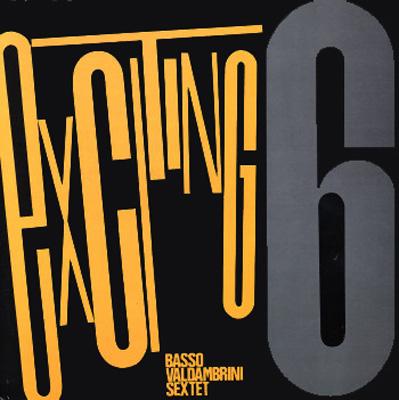
Basso_Valdambrini_Exciting_6.jpgHopefully a short discussion of each album will suggest what you are missing if you have not heard Basso. I begin with a reprint of a title "Exciting 6" (Easy Beat 1967), featuring Gianni Bass on tenor sax, Oscar Valdambrini on trumpet, Dino Piana on trombone, Renato Sellani on piano, G. Crovetto or Giorgio Azzolini on bass, and Lionello Bionda on drums. Of the group, it is Basso and Sellani who went on to brilliant and very long and distinguished careers.  The CD clearly features songs based on the Jazz Messengers model, as heard at the outset on the opener "Before Ten O'Clock"; and on Horace Silver with some more afro-cuban rhythms like "Look Out" or Guernica"; but it also features many ballads and blues that are clearly original to the band and very nicely played. A lot of potential at an early point in his career, as well as in the career of Sellani, who has some nice solos as well. Nice disc but not essential.

Jumping ahead to 1981, we have a set of four tunes played by Basso and a piano trio as part of the Swiss Radio Days series, which was released as "Swiss Radio Days Volume 24 Gianni Basso and Guy Lafitte" (The Montreux Jazz Label 2010). Lafitte also plays four tunes so there are eight in all on the disc. Basso plays with his lush and rounded sound, and in particular shines on "Groovin' High" and "Lush Life." Again, nice but not essential.

Cojazz - All Those Melodies CD Cover ArtA jump now to 1999 and a really nice disc, "All Those Melodies" (The Montreux Label 1999) again with Basso leading a piano trio. Basso was 68 at the time and his sound, dynamics, expression, and improvisation was peaking. Beautiful renderings of a range of classics like "I'll Walk Alone", "What a Difference a Day Made" and "That Old Feeling" simply bring out the best in Basso as he recaptures the golden sounds of the great tenors of the 50s. This one is worth having if you like solid standards play by a classic sounding tenorman. This is also the disc Adam introduced me to Basso with, and it was a worthy introduction.

Basso hits his stride from 1999 until his passing in 2009, as demonstrated on the next seven recordings.

The next recording is brilliant -- "Two for the Cities" (Philology 2001) and why not -- it is a tenor sax and piano duo of Basso with Renato Sellani, another giant in the Italian jazz pantheon. And of course, one of my favorite settings that I beleive brings out the best in both players. The "gimmick" is that each song is named for a city, so we get glorious renditions of "Do You Know What it Means to Miss New Orleans", "A Foggy Day in London Town" and "Autumn in New York" played to the highest standard possible, along with a number of originals and songs by Italian composers. Just great -- nuanced, expressive music by two pros and timeless music. A surefire winner here to listen to.

Isn't It RomanticSince the previous disc was so good, Sellani and Basso do it again on "Isn't It Romantic" (Philology 2001) with the same results -- a beautiful album played by two masters. This time all twelve songs are classics, from "Nancy With the Laughing Face" to open, to "I Remember Clifford" as the closer. In between are great pairings on "I'll Remember April", Body and Soul", the title song, and "Over the Rainbow" that could make you cry tears of happiness. A glass of wine, a companion, and this is heaven. Only the art on the cover is lousy!

"Blue Woods" (Philology 2002) followed the next year, and takes a different tack, with a quartet of Basso, Andrea Pozza on piano, Luciano Milanese on bass, and Stefano Bagnoli on drums. Enrico Rava makes it a quintet on the finale "Blue Woods", which is earlier played as a quartet. This is the music of Phil Woods as composer, but in Basso's hands the tenor sax changes the dynamics of the pieces, providing a richer tone and deeper voice. Basso caresses the opening ballad "Song for Sass" with the lyricism and sound of the late Ben Webster, the solos on a brisk "Where Do You Go From Here". "Without You" is a lovely and gentle bossa nova. And on it goes -- "The Last Page" suggests Stan Getz,  "Lady J" is a ballad played as a bossa nova, and  "Blue Woods is a stunning blues both with and without Rava. This is a great salute from Basso to Woods.  

Gianni Basso Quartet Meets Enrico Rava: Tea For TwoIn 2003 Basso returned to Renato Sellani, this time with Massimo Moriconi on bass and Massimo Manzi on drums, and the result is "I Wish I Knew" (Philology 2007). This is mostly a set of ballads from the Great American Songbook, with Basso's lush tenor complemented beautifully by Sellani's flawless touch. The two are old pals and show it on this CD as they play back and forth with the melodies, harmonies and improvisations without a pause or hitch. "I'll Be Seeing You" is a gorgeous solo outing for Basso, while Sellani lead in to "The Man I Love" which then opens into a swinging rendition. Basso's round and mellow tone is reminiscient once again of the great Ben Webster. Another highlight for Basso.


When the Basso Quartet, with Andrea Pozza, Luciano Milanese, and Stefano Bagnoli meet Enrico Rava, on "Tea for Two" (Philology 2003) sparks fly, fireworks go off, and the result is magnificent. This is the definition of five stars. The set again features standards and include a lovely take of "Bye, Bye Blackbird," a lush and relaxed "All the Things You Are", and an equally relaxed "Do You Know What It Means to Miss New Orleans?" A gem.

The last recordings of Basso are Japanese imports. The first is "Body and Soul" (Venus Records 2008) and is one more duet with Renato Sellani featuring standards. It is a very nice disc and worthy of a collection but is also somewhat duplicative of the earlier Philology recordings. The second, however, is more unusaul, and find Basso teaming with guitarist Irio de Paula on "Recado Bossa Nova" (Pony Canyon 2009). As noted on earlier recordings Basso had included bossa nova and other latin beats, going all the way back to the "Exciting 6" disc in 1967. Here he teams with a guitarist and piano trio, and delivers a set of delightful, charming latin grooves by Antonio Jobim, Sergio Mendes, Kenny Dorham and others. A charming highlight is a bossa rendition of "It Might As Well Be Spring," but it is all great. Bosso's mellow sound blends perfectly with the group and the mood of the songs, and the result is a winner.

So there it is -- ten discs by a marvelous tenor sax player whose influence is felt strongly by the next generation in Italy -- and hopefully enough background to inspire one to go out and listen to his music. For those who love the old Blue Note sound, who loved Ben Webster or Dexter Gordon or Stan Getz, for those like me who love the sax/piano pairing, you really owe youself to listen.

Italian jazz is going to amaze you as we move forward in these posts.

The Dean of Italian Pianists: Enrico Pieranunzi

According to the All Music Guide, Rome native Enrico Pieranunzi has 50 recordings to his credit as a leader, and countless other sessions as a supporting player. His own website numbers over 70 recordings in total. Whatever the number, Pieranunzi is clearly one of the most prolific pianists of our times since he stepped center stage in the 1970s.  His first recording as leader according to the discography was made in 1975, when Pieranunzi was 26, and since then his music has been a staple of the Italian and international jazz scene. Whether in the classic piano trio format, duos, or as a soloist; or in larger groups or as a sideman, Pieranunzi brings elegance to anything he plays.

I am totally hooked on Pieranunzi, and consider him to be my number one pianist.  His works are tremendously varied, not only in the format/groupings, but also in the range of music from which he draws inspiration both as a player and as a composer. His music includes songs from the great jazz standards, Italian standards and folk music, movie scores from Rota and Morricone, the classical pieces of Scarlatti, Bach, and Handel, and tributes to Wayne Shorter and Bill Evans; alongside his own compositions and those of others writing jazz today. His interpretations range from the straight-forward to gorgeous flights of fancy as he interprets, energizes, and recreates the songs in his own vocabulary. He is a classicist at heart and student of that form, as well as a student of Evans and other post bop players. Never straying too far from the melody or basic harmonics, he nonetheless opens new horizons on any song he touches. He thinks large and plays large, not with a lot of single note runs but rather with lots of chordal voicings from both hands, as if he was composing for an orchestra and all of its voices.  

Product DetailsI pulled from my shelves 34 CDs on which Piernanunzi is the leader, ranging from 1980 up to his most recent recording, "Permutation" (CamJazz 2012), a trio with his longest standing group of Marc Johnson on bass and Joey Baron on drums. Johnson, in fact, has played with Pieranunzi regularly since at least 1980, and the two have made two exquisite duo recordings, "Transnoche" (Egea 2003) and "Yellow and Blue Suites" (Challenge 2008).

Rather than trying to describe individual songs or CDs, I would sum up Pieranunzi's play with the following adjectives:
  • Product DetailsElegant
  • Lyrical
  • Expressive
  • Prolific
  • Creative
  • Sensual
  • Eloquent
  • Fresh
  • Energetic
  • Captivating
Furthermore, it is often said that you are known (or judged) by the company you keep.  So here is a list of the most common playing partners of Pieranunzi on his recordings, starting with the non-Italians: 
  • On bass, Marc Johnson, Charlie Haden, Hein Van de Geyn, John Patitucci
  • On drums, Joey Baron and Paul Motian, Hans Van Oosterhout, Antonio Sanchez, Billy Higgins
  • On piano, Bert van der Brink 
  • Product DetailsOn saxes, Chris Potter, Phil Woods, Lee Konitz, Ronnie Cuber, Yosvanny Terry
  • On trumpet, Kenny Wheeler, Chet Baker, Eric Vloeimans, Diego Urcola, Art Farmer (flugelhorn) 
  • On guitar, Philip Catherine, Jim Hall

And Italians galore. Among the best known:

  • Roberto Gatto, drums
  • Dado Moroni, piano
  • Enzo Pietropaoli, bass 
  • Enrico Rava, trumpet
  • Fabrizio Bosso, trumpet 
  • Rosario Guiliani, saxes 
  • Gabriel Mirabassi, clarinet 
  • Product DetailsGianluca Petrella, trombone 
Hopefully, the above has established Pieranunzi's incredible credentials and perhaps a sense of his playing in your mind. With that in mind, here is the list of re3cordings that I have in my collection, coded as follows:

  • Red writing means solo recording
  • Blue writing means trio
  • Black writing includes all other combinations
  • ***** Five stars indicate the recordings that I might suggest today as the best places to start. By tomorrow, however, that could change. Basically any Pieranunzi is a good Pieranunzi. The best way to select for the first time probably is to decide on the grouping, and then on the mix between standards or other sources of the music. Or perhaps on the supporting players, Motian versus Baron, Haden versus Johson, etc.

In chronological order:
  • "Jazz Roads" (CamJazz 1980), with Roberto Gatto, Marc Johnson, and Steve Houghton (d)   
  • "No Man's Land" (Soul Note 1990) with Marc Johnson and Steve Houghton
  • ***** "The Night Gone By" (Alfa Music 1996) with Marc Johnson and Paul Motian
  • "The Chant of Time" (Alfa Music 1997) with Marc Johnson and Joey Baron
  • "Un'alba Dipinta Sui Muri" (Egea 1998) Solo
  • ***** "Daedalus' Wings" (Challenge 1999) 2 pianos with Bert van den Brink
  • "Don't Forget the Poet" (Challenge 1999) Quintet
  • "Plays the Music of Wayne Shorter" (Challenge 2000) With Hein van de Geyn and Hans van Oosterhout
  • "Improvised Forms for Trios" (Challenge 2000) Hein van de Geyn, Hans van Oosterhout
  • "Evans Remembered" (VVJ Jazz 2001) Sextet  includes Fabrizio Bosso and Gabriel Mirabassi
  • ***** "Play Morricone" (CamJazz 2001) Marc Johnson and Joey Baron
  • "Alone Together" (Challenge 2001) Quintet
  • "One Lone Star" (YVP Music 2002) Quartet includes Roberto Gatto and Rosario Giuliani
  • "Current Conditions" (CamJazz 2003) Marc Johnson and Joey Baron
  • ***** "Transnoche" (Egea 2003) Duo, with Marc Johnson
  • ***** "Fellini Jazz" (CamJazz 2004) Quartet with Chris Potter Charlie Haden and Paul Motian
  • "Doorways" (CamJazz 2004) Paul Motian and Chris Potter****
  • "Play Morricone 2" CamJazz 2004) Marc Johnson and Joey Baron
  • ***** "Live in Paris" (Challenge 2005) Hein van de Geyn and Andre Ceccarelli (d)
  • Product Details"Special Encounter" (CamJazz 2005) Charlie Haden and Paul Motian
  • ***** "Ballads" (CamJazz 2006) Marc Johnson and Joey Baron
  • "Untold Story" (Egea 2006)  Marc Johnson and Paul Motian
  • "Jazz Italiano Live 2006" (Palaexpo 2006) Septet, live from Umbria Jazz Festival 
  • "Live in Japan" (CamJazz 2007) Marc Johnson and Joey Baron
  • "Parisian Portraits" (Egea 2007) Solo
  • "As Never Before" (CamJazz 2008) Marc Johnson, Joey Baron, and Kenny Wheeler
  • ***** "Plays Domenico Scarlatti" (CamJazz 2008) Solo
  • ***** "Yellow and Blue Suites" (Challenge 2008) Duo with Marc Johnson
  • "Seaward" (Soul Note 2009)  Hein van de Geyn and Andre Ceccarelli
  • "Dream Dance" (CamJazz 2009) Marc Johnson and Joey Baron
  • "Live at Birdland" (CamJazz 2010) Latin Jazz Quintet
  • "Wandering" (CamJazz 2010) Solo
  • Product Details"Plays Bach, Handel, and Scarlatti" (CamJazz 2011) Solo
  • ***** "Permutation" (CamJazz 2012) Marc Johnson and Joey Baron

 
Finally, I would be remiss if I didn't note three other recordings on which Pieranunzi is not listed as the leader that are rather special:

  • "Chet Baker Meets the Space Jazz Trio" (Philology 1988) with Enzo Pietropaoli on bass and Fabrizio Sferra on drums.
  • "Silence" (Soul Note 1989) Charlie Haden with Chet Baker, Enrico Peranunzi and Billy Higgins
  • "Soft Journey"  (Egea Historic Collection 2007 (recorded in 1979/80) Chet Baker and Enrico Pieranunzi with Maurizio Giammaco tenor sax, Riccardo DelFra, Bass and Roberto Gatto, drums
Try Pieranunzi. You'll find his music as rewarding and memorable as a glass of table red, some cheese, bread, and olives on a warm Tuscan evening. Ciao!