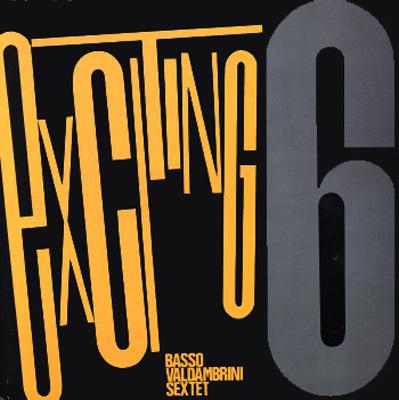
Renato Sellani was born in the province of Ancona on the west coast of Italy in 1926, and is another master of the jazz piano; in fact, he is often referred to as "Il Maestro." He came to jazz late, after studying political science at the University in Rome. It was during this time that he got hooked on jazz, spending a lot of his time in the nightclubs of the capital, and then teaching himself to play the piano at the home of a friend. This was during the period right after World War II when Italy was returning to normalcy after the Fascist era, and the nightlife was grand. Sellani evidently was a natural at the piano, since by 1958 he was invited to Milan by his friend and fellow musician Franco Cerri, widely considered the best guitarist ever produced by that country. Milan was a center of the arts and a major stopping point for American jazz players at that time, and Sellani prospered by being among them. He joined the quintet Basso and Valdambrini, and played in that group for quite a long time, although he also became well known as a solo artist as well. Sellani must have been already recognized as a star, for he met and played with the singer Billie Holiday early on, and then was clearly good enough to be Chet Baker's first pianist in Italy, and later an accompanist for Sarah and Sarah Vaughan and Helen Merrill. The pairing produced at least one classic album, "Chet Baker in Milan" (Jazzland/OJC 1959) which is easily recommended and they also toured together. Sellani went on to play with other major figures including Lee Konitz, Sarah Vaughan, Dizzy Gillespie, and Phil Woods; in addition to his Italian comrades such as Rava, Basso, and of course Cerri.
Sellani has few recordings under his name until the late 1990s, when he began his current relationship with the Italian label Philology, for which he has now recorded in excess of 40 albums in a range of settings from solo to small ensembles, most often with the leading players of Italian jazz. Still, he is hardly a household name in the United States, which according to Thomas Conrad of All About Jazz is almost tragic: "The fact that Sellani is one of the most complete, most romantically seductive interpreters of standards in all of jazz is criminally underappreciated outside Italy."
Sellani has been at it for over 60 years and is a master of the American songbook, along with Italian classics, his own compositions, and a classical repetoire including Chopin and Puccini among others. His creativity is outstanding, his playing luminous. He plays with the grace and delicacy of a master, and his seemingly casual attitude at play is more the product of years of experience than of his actual feeling toward the music. Raised in the period of the big bands and swing, he is definitely grounded in melody, and produces wonderfully lush and loving interpretations of them along with passionate embellishments and improvisations. He has been compared to Hank Jones and Tommy Flanagan, two of the United States' most respected and tasteful pianists of all-time.
As noted earlier, Sellani has recorded prolifically for Philology during the past dozen or so years, seemingly catching up for all those years before. I have six discs of Sellani as leader that are all worthy of listening to and, incredibly, they were recorded between March 2007 and December, yet each is a jewel. I also have a number of discs on which he plays a support role, whcih cover his earlier period, including the Gianni Basso recordings I wrote about yesterday, as well as the Chet Baker mentioned earlier. These will be described when I discuss other Italian leaders. Here then are the seven discs in order of recording date.
 The first CD was recorded on March 2007, "La Mia Finestra Su Napoli" (Philology 2007). Translated as "My Window on Naples" and featuring a pretty picture of Naples Bay at night, this solo recording is a paean to Naples and its beauty. The program is purely Italian classics like "Torna a Surriento" and "O Sole Mio" and while we in the U.S. sometimes think of these songs a corny, in Sellani's hands they are anything but. Here they are poetry, as Sellani enhances the beauty of the melodic lines wtih lush chords and simple enhancements. Still, a program that would bring Italians to tears may not live up to that standard in the U.S. despite the beauty of the music and delicacy with which it is played. Recommended for the beauty and romance but only to those who are not looking for a more standard fare.
  In July 2007, Sellani recorded "My Foolish Heart" (Venus Records 2008) with his standing trio of Massimo Moriconi on bass and Massimo Manzi on drums. This is a more standard set of songs taken in fact from the Great American Songbook and features the kind of sound and interplay that one associates here in the U.S. with Hank Jones or Tommy Flanagan. A risque cover but great music inside.
 In September 2007, Sellani came right back, this time on Philology, with "Blues for Chet" (Philology 2008), a piano and bass duo with his longtime bassist Massimo Moriconi. With the two playing so closely together and celary listening to each other intently, they role out a series of impeccible melodies, set in 8 sections of paired songs. so they play "Blues for Chet" and "Stella by Starlight" to open, then "My Funny Valentine" with "But Not for Me" and so on tp the end. Delightful, delicious, de-lovely music throughout, with the same attention to melody with just the simplest of frosting added which absolutely will engate you. First class again.
Back in the studio on January 2008, bay now it should be clear to those reading this that Sellani is the romantic master of the standard, a ballad player of the first magnitude, and truly "Il Maestro." The penultimate recording in my collection is "Amapola" (Venus 2008), a duo piano outing with another of the deans of Italian jazz, Danilo Rea. Over 10 songs, the two trade back and forth with the same delicacy and charm each shows so often through the length of their discography (More on Rea in a coming post). The music is part American songbook and part Italian songbook, with a bit of Jobim on "Wave". Another smashing performance.
Next up in December 2008 is a tribute to Cole Porter called "True Love" (Philology 2009) with a few solos, the trio, and on a couple of songs, either Fabrizio Bosso on trumpet or Joe Lee Wilson on vocals. Sellani's piano playing is made for Cole Porter's music, and this does not dissapoint. From a snappy "Begin the Beguine" and "Just One of Those Things" to the lilting beauty of "I Love Paris" and "So In Love", the music exudes the warmth, charm, and even houmor of Porter's music and lyrics, even without the words. Classic.
Next up in December 2008 is a tribute to Cole Porter called "True Love" (Philology 2009) with a few solos, the trio, and on a couple of songs, either Fabrizio Bosso on trumpet or Joe Lee Wilson on vocals. Sellani's piano playing is made for Cole Porter's music, and this does not dissapoint. From a snappy "Begin the Beguine" and "Just One of Those Things" to the lilting beauty of "I Love Paris" and "So In Love", the music exudes the warmth, charm, and even houmor of Porter's music and lyrics, even without the words. Classic.
 Finally, Sellani takes on one of the true romantic composers of our times, Michel Legrand, on "Grand Piano" with his trio of Moriconi and Manzi. He actually mixes 6 solos in with 8 trio recordings, among them gloriously moving takes of "Windmills of You Mind", You Must Beleive in Spring", "I Will Wait for You ( twice, as a solo and trio), and "Summer of '42." Romance is clearly in the air, and Sellani brings it to you with his usually expressive play and lush improvisations along the way.